Jump to the format decision table →
The short answer
Choose heat-seal vacuum bags for dry or low-moisture portions that benefit from a close fit and a flatter frozen shape, provided you already have a compatible appliance and accept a new bag for each pack.
Choose rigid reusable freezer containers for liquids, foods that need shape protection, portions you reopen, and routines where straightforward filling and washing matter more than the flattest possible package.
A mixed system is often more useful than forcing every food into one format: containers for liquids and complete meals, heat-seal packets for selected components.
Compare the workflow, not just the package
Pick by food type
The National Center for Home Food Preservation recognizes both rigid and flexible freezer packaging. Its guidance describes rigid containers as especially suitable for liquid packs and flexible materials as suitable for dry foods and foods with irregular shapes. Follow its food-specific headspace guidance rather than assuming one fill level works for every package.
Two researched examples, two different jobs
These products illustrate the format decision; they are not a universal ranking. Current manufacturer information and Amazon availability were checked on 18 August 2026. Prices, ratings and review counts are intentionally excluded because they change.
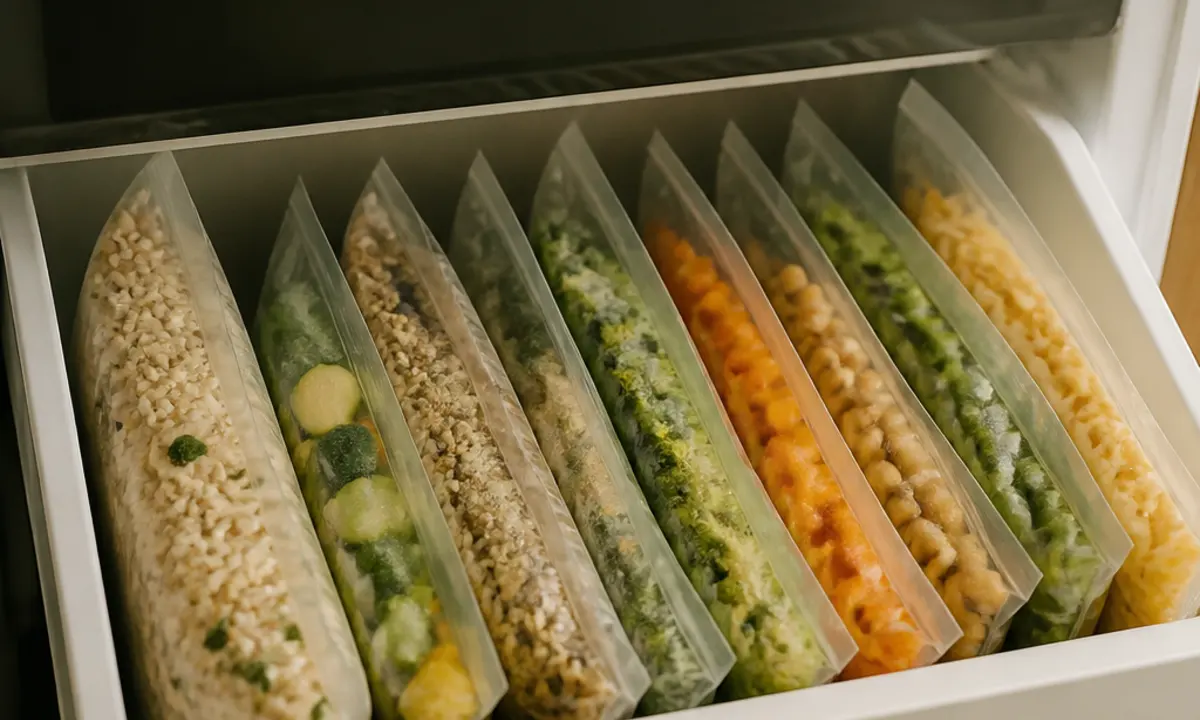
FoodSaver Heavy Duty Quart Bags
Why it made the shortlistConsider when pre-cut quart portions and a flat heat-seal workflow fit foods you freeze regularly, and a compatible countertop FoodSaver appliance is already available.
- Useful for
- Pre-cut quart-size heat-seal packs when portion consistency matters and a compatible countertop FoodSaver appliance is already part of the workflow.
- Source-checked details
- FoodSaver identifies 44 pre-cut quart bags, freezer suitability and compatibility with FoodSaver appliances except handheld sealers. The manufacturer describes this version as a single-use heat-seal bag rather than a reusable zipper bag.
- Watch for
- Requires a compatible heat-seal appliance and uses a new bag for each pack. Do not treat the manufacturer's promotional freshness language as an independently verified performance result.
Check the exact model, seller, availability and current terms on the live listing before buying.
Image note: This generic, unbranded image illustrates the product type and is not a photograph of the exact named product.
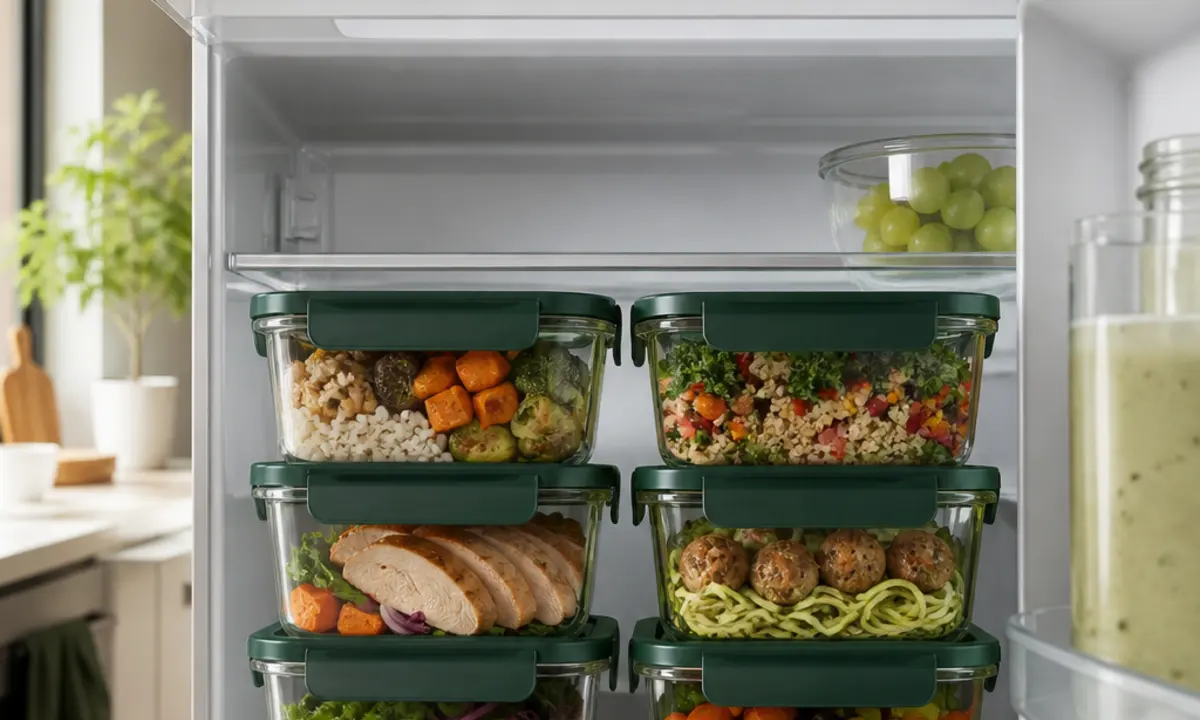
Rubbermaid Brilliance Glass
Why it made the shortlistConsider when liquids, shape protection, reheating and a washable rigid stack matter more than producing the flattest possible packet.
- Useful for
- A stackable glass system when reheating and stain resistance matter.
- Source-checked details
- Rubbermaid lists the range as freezer-, microwave- and dishwasher-safe, with glass bases oven-safe to 450°F. The manufacturer also specifies modular stacking and universal lids across Brilliance materials.
- Watch for
- Glass is heavier and takes more fixed freezer space. Follow the exact thermal-shock and lid instructions supplied with the product.
Check the exact model, seller, availability and current terms on the live listing before buying.
Image note: This generic, unbranded image illustrates the product type and is not a photograph of the exact named product.
Five checks before choosing a format
- Name the food. Start with the meal or component you freeze most often, including whether it is liquid, moist, delicate or dry.
- Map the route. Write down filling, cooling, freezing, thawing, reheating, washing and storage steps. The format should simplify the whole route, not just the freezer shelf.
- Check compatibility. Match heat-seal bags to the exact appliance. For containers, verify the exact model’s freezer, microwave, oven, dishwasher and venting instructions.
- Count recurring work. Heat-seal bags require replenishment and disposal. Reusable containers require washing, drying, lid matching and empty storage.
- Measure the freezer zone. Test the actual shelf width, depth and stack height before standardizing a size.
A repeatable mixed-system workflow
- Cool cooked food safely. Divide large amounts into shallow containers and refrigerate or freeze promptly.
- Route by food. Put free-flowing liquids and protected meals into suitable rigid containers; reserve heat-seal bags for foods that match that workflow.
- Portion consistently. Repeat the few sizes that correspond to actual meals or components.
- Label before freezing. Record the food and date, then place the oldest suitable package in the use-first position.
- Freeze for the intended shape. Freeze heat-seal packets flat when appropriate; stack rigid containers only as their instructions and your shelf allow.
- Inspect and maintain. Discard damaged single-use bags, and follow the exact cleaning and seal-care instructions for reusable containers.
Connect the routine with the label-and-rotation checklist, the one-shelf freezer plan and the container care checklist.
Sources and evidence boundaries
Freezer-package selection and headspace guidance comes from the National Center for Home Food Preservation. Cold-storage and thawing guidance comes from FDA and USDA. Product form, compatibility and care claims come from the named manufacturers. Kitchen Flow Lab did not perform a hands-on test, storage-life comparison, freezer-burn trial, cost analysis or environmental assessment.
Useful detail
The format decision in everyday terms
The better format depends on the food, the handling route and how often the package must be opened.
Why do liquids often favor a rigid first step?
A rigid vessel can contain movement, preserve expansion room and stay supported during freezing. A liquid may later move into another storage format only when the food is stable and the relevant product instructions support that workflow.
See the soup portion workflowWhat if you open the package several times?
A reclosable container may be more practical for food used in stages. A permanent heat seal suits a portion intended to stay closed until use. Match the closure to the number of times the food will realistically be accessed.
Can one freezer use both bags and containers?
Yes. A hybrid system can reserve flat packets for firm portions and rigid containers for liquids, fragile food or frequently opened ingredients. The important step is assigning each format a specific shelf zone and label rule.
Build a flat-packet and rigid-container zoneNext decision
Check whether the appliance fits the routine.
If heat-seal bags suit your foods, compare the machine footprint, controls, cleanup and supply workflow before choosing a sealer.
Compare vacuum-sealer specifications →