Jump to the researched product example →
The buying decision in one minute
A countertop vacuum sealer is a strong fit when you freeze flat portions, package raw proteins or meal components in batches, and value a smaller frozen footprint enough to manage compatible bags. A rigid container is usually simpler for foods you open repeatedly, meals that must hold their shape, and liquids you do not want drawn toward a sealing channel.
If small-kitchen storage is the priority, treat the appliance footprint and the supply of bags as one system. The machine may store vertically, but rolls, precut bags, labels and a clean staging area still need a home.
Flat portions
Useful for compact freezer packets that can be frozen in one layer, then filed or stacked.
Batch workflow
Roll storage, a cutter and quick alignment matter more when many bags are made at once.
Food condition
Dry, moist, delicate and liquid foods place different demands on controls and technique.
Ongoing supplies
Bag compatibility and recurring material use belong in the decision before purchase.
Seven specifications that change the workflow
A current compact product example
The example below is included because its documented design makes the trade-offs easy to see. It is not a performance ranking. The Amazon listing and manufacturer guidance were checked on 18 August 2026; availability and listing details can change.
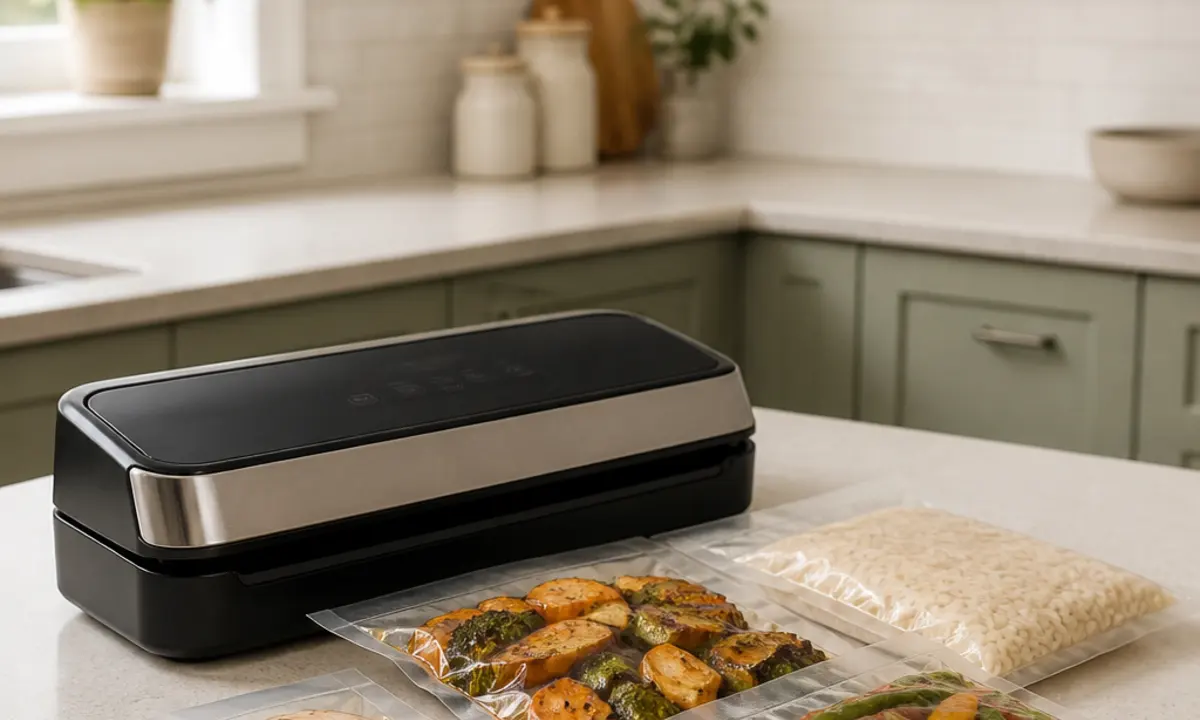
FoodSaver PowerVac VS0150
Why it made the shortlistConsider when compact vertical storage and separate Dry/Moist settings matter more than having built-in roll storage and a cutter.
- Useful for
- A compact external vacuum-sealing workflow when vertical storage, dry/moist modes and flat freezer packets match the routine.
- Source-checked details
- The current Amazon listing identifies the VS0150 and specifies vertical storage, Dry and Moist settings, a bag-alignment tray, compatibility with a handheld sealer, and an included starter roll and bags. FoodSaver's current warranty page lists a three-year limited warranty for the PowerVac series.
- Watch for
- Vacuum packaging does not make perishable food shelf-stable. Keep perishables at 40°F or below in the refrigerator or at 0°F in the freezer, and budget for compatible bags or rolls.
Check the exact model, seller, availability and current terms on the live listing before buying.
Image note: This generic, unbranded image illustrates the product type and is not a photograph of the exact named product.
How the VS0150 maps to the checklist
- Storage: the current listing specifies vertical storage, a useful distinction for a narrow cabinet or counter zone.
- Food controls: the listing identifies separate Dry and Moist settings. Follow the exact manual and stop if liquid approaches the seal area.
- Bag setup: an alignment tray is listed, while the compact format does not advertise built-in roll storage or a cutter. Custom bag-making therefore remains a separate step.
- Accessories: the listing says it can connect to a handheld sealer; verify what is included in the selected package before buying.
- Warranty: FoodSaver's current warranty table lists three years for the PowerVac series and limits coverage to qualifying purchases from FoodSaver or an authorized seller.
A meal-prep workflow that protects the seal
- Cool and portion safely. Use shallow containers and current USDA/FoodSafety.gov handling guidance before packaging cooked food.
- Choose a bag size with a clean sealing margin. Follow the appliance instructions rather than packing food to the open edge.
- Control moisture. For wet foods, use the exact model's Moist setting and technique. For free-flowing liquids, consider freezing in a rigid mold or container first instead of assuming the machine can seal them directly.
- Label before the package disappears into the freezer. Add contents and date, then place older packages in the use-first zone.
- Freeze flat in one layer. After packages are solid, file or stack them within the measured shelf plan.
- Inspect before use. Repackage a torn freezer packet and follow safe thawing and reheating guidance for the food.
When a reusable container is the better tool
Choose a rigid or reusable flexible container when the food is liquid, the portion needs protection from crushing, the package will be opened and closed, or you want to avoid a new heat-seal bag for every cycle. Vacuum bags make the strongest case when the flat frozen footprint and close fit materially improve your routine.
Use the heat-seal bags vs reusable containers comparison to map those trade-offs to specific foods and a repeatable packing routine.
For soup and sauce, compare liquid-friendly container designs. For the whole shelf, use the one-shelf freezer system and the label-and-rotation checklist.
Sources and evidence boundaries
Product form and included-item claims come from the current Amazon listing for ASIN B08BF3GB5Q. Category-selection guidance comes from FoodSaver. Food-safety statements come from USDA. No Kitchen Flow Lab hands-on test, seal-strength test, noise measurement or durability assessment was performed.
Useful detail
Vacuum-sealer specifications translated into workflow
A machine specification matters only when it changes preparation, sealing, storage or recurring effort.
Does a moist setting make liquid food ready to seal?
No setting removes the need to control free liquid near the seal. Follow the exact machine and bag instructions. Some liquid-heavy foods need a different package or a supported pre-freezing step before a heat-seal workflow is appropriate.
Check which foods fit a vacuum-bag workflowWhen does built-in roll storage matter?
It matters when you regularly cut custom lengths and have enough counter space for the larger machine. Pre-cut bags can simplify setup, while roll storage may reduce the number of bag sizes kept on hand. Compare the recurring workflow, not only the appliance footprint.
Why should bag supply be part of the buying decision?
The sealer is only one part of the system. Compatible bags, storage space, cutting steps and replenishment frequency continue after the appliance purchase. Include those recurring tasks before deciding which machine format fits.
Build the complete system
Compare vacuum bags with the containers you already use.
The best small-kitchen setup can mix formats: flat packets for dense components, rigid containers for complete meals and a repeatable label-and-rotation rule for both.
Compare bags with reusable containers →