The system has two stages
Freeze-flat stage
Packages lie in one supported layer until solid so seals, food and freezer surfaces are not stressed by an unstable pile.
02File-or-stack stage
Solid packets move into a labelled zone where older food remains visible and different portions cannot slump together.
03Rigid-food exception
Meals that crush, liquids that cannot be controlled and foods opened repeatedly stay in suitable containers.
04One-in, one-out review
Every new packet triggers a quick check of the oldest packet in that category.
Measure before choosing the packet
- Measure the shelf. Record usable width, depth and height after allowing for vents, drawers and door clearance.
- Reserve a freezing tray. Choose a level footprint where fresh packets can freeze in one layer without blocking airflow.
- Choose two or three portion footprints. A small meal, shared meal and recipe component are usually easier to file than many random shapes.
- Set maximum fill lines. Follow the bag, sealer or reusable-vessel instructions and leave a clean closure area.
- Choose a filing direction. Upright filing needs firm frozen packets and side support; low stacks need visible labels on the outward edge.
Three ways to create a compact footprint
The examples below solve different problems. Product facts were checked on 18 August 2026; verify current instructions and package details.
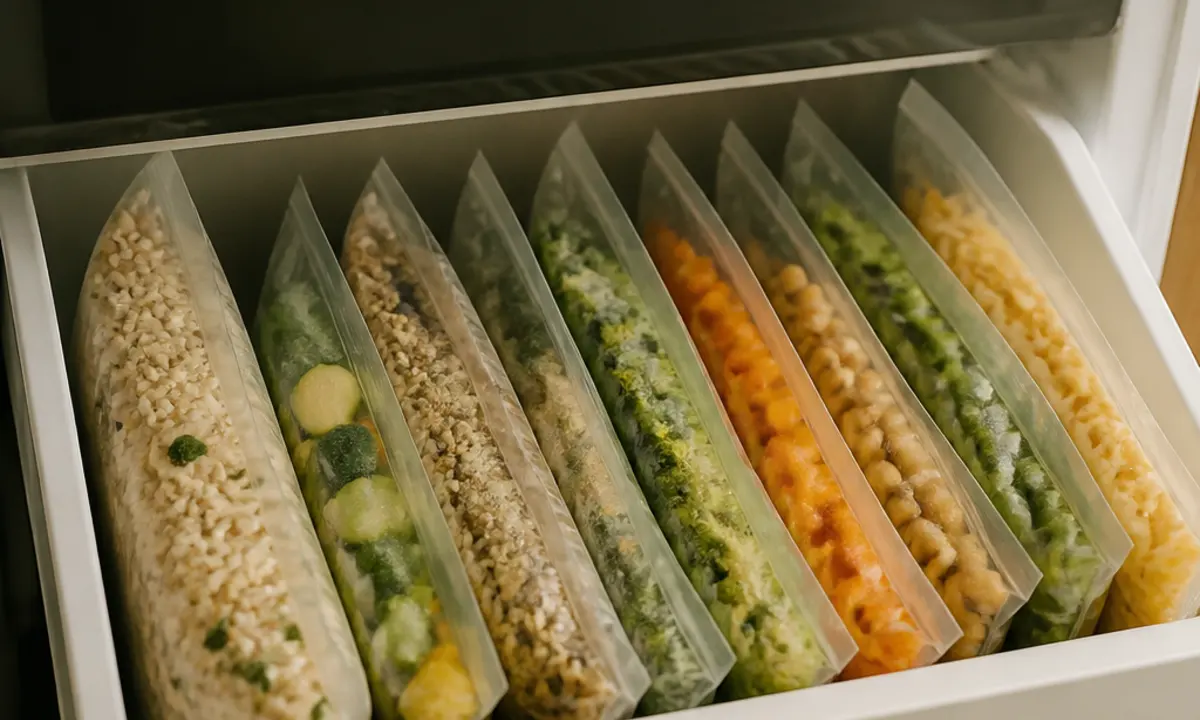
FoodSaver Heavy Duty Quart Bags
Why it made the shortlistConsider for a heat-sealed flat-packet workflow when the portion fits the bag and the food can be sealed without drawing liquid into the closure area.
- Useful for
- Pre-cut quart-size heat-seal packs when portion consistency matters and a compatible countertop FoodSaver appliance is already part of the workflow.
- Source-checked details
- FoodSaver identifies 44 pre-cut quart bags, freezer suitability and compatibility with FoodSaver appliances except handheld sealers. The manufacturer describes this version as a single-use heat-seal bag rather than a reusable zipper bag.
- Watch for
- Requires a compatible heat-seal appliance and uses a new bag for each pack. Do not treat the manufacturer's promotional freshness language as an independently verified performance result.
Check the exact model, seller, availability and current terms on the live listing before buying.
Image note: This generic, unbranded image illustrates the product type and is not a photograph of the exact named product.
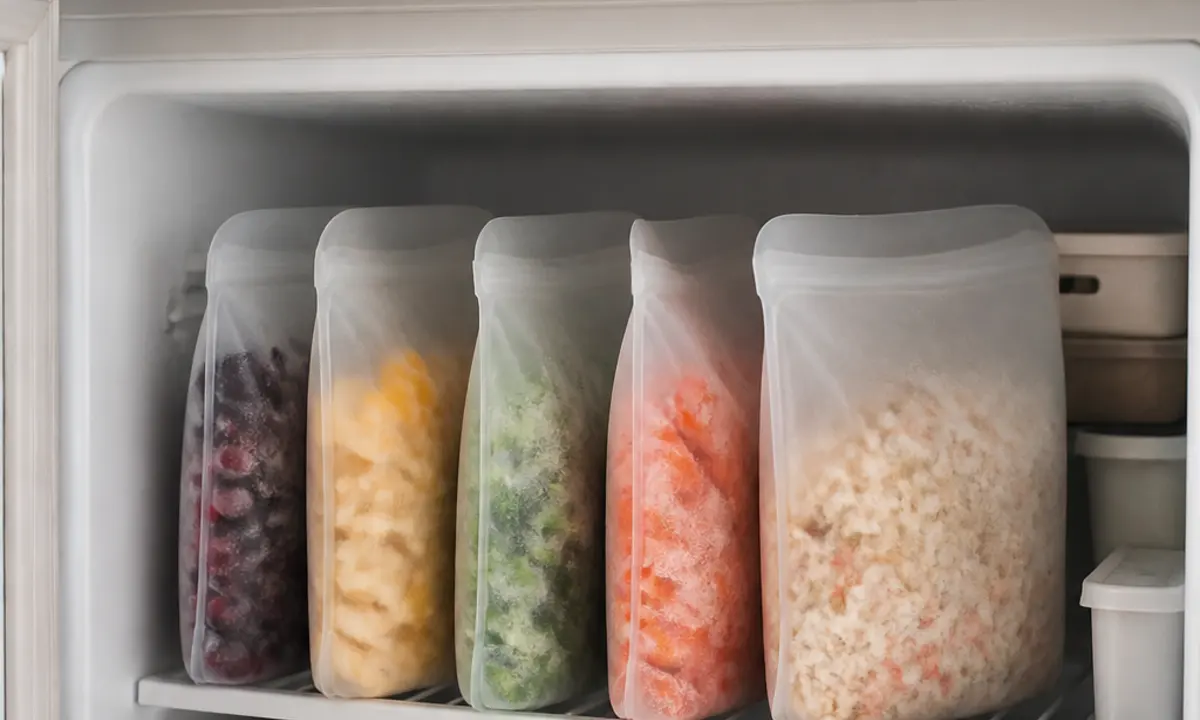
Stasher Stand-Up Mid
Why it made the shortlistConsider when a reusable flexible bag and stable stand-up shape fit the food; do not assume it will compress or file exactly like a heat-seal bag.
- Useful for
- Flexible freezer storage when an empty container should collapse into less space.
- Source-checked details
- Stasher specifies a 56 fl oz stand-up format, Pinch-Loc seal, and freezer, microwave, dishwasher and oven use up to 425°F.
- Watch for
- Flexible sides can be less stable than rigid boxes while filling and stacking. Keep the seal clean and avoid sharp objects.
Check the exact model, seller, availability and current terms on the live listing before buying.
Image note: This generic, unbranded image illustrates the product type and is not a photograph of the exact named product.
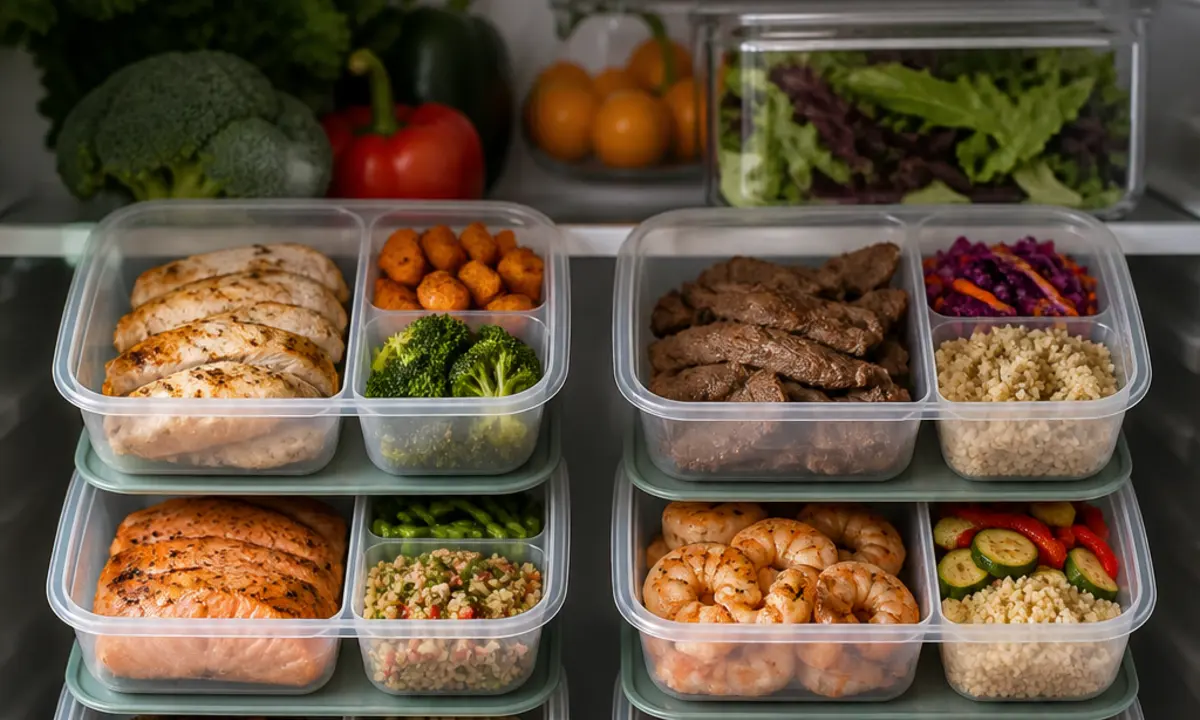
Bentgo Prep 3-Compartment
Why it made the shortlistConsider when light rigid portions and consistent container dimensions matter more than the thinnest possible frozen profile.
- Useful for
- Pre-portioned meals where one entrée and two sides should stay separated.
- Source-checked details
- Bentgo lists ten 4-cup trays with three compartments. The trays are freezer- and microwave-safe; the manufacturer says to remove lids before microwaving and hand-wash lids for best results.
- Watch for
- Compartment shapes reduce flexibility for soups and bulky foods. This is a lightweight system, not a leakproof soup container.
Check the exact model, seller, availability and current terms on the live listing before buying.
Image note: This generic, unbranded image illustrates the product type and is not a photograph of the exact named product.
A practical zone map
The label has to face the opening
Write the food name, stored date and useful portion on the part of the package that remains visible in its final orientation. A beautiful label on the broad face is not useful once that face is hidden between packets.
Pair the physical zones with the freezer inventory system. If you want a complete one-shelf layout, use the one-shelf freezer plan.
Sources and evidence boundaries
Food-safety statements come from USDA and FDA. Product facts come from manufacturer information and Amazon listings for the named ASINs. Kitchen Flow Lab did not measure freezing speed, freezer capacity, puncture resistance or space savings. The layout is a planning method to adapt to the measured freezer.
Useful detail
How to make flat packets behave like a system
Flat storage saves useful space only when packet thickness, freezing support and rotation stay consistent.
Why should packet thickness be repeatable?
A consistent thickness helps packets freeze into predictable shapes and fit the same file or bin. Match the quantity to a future use rather than spreading every food into the thinnest possible layer.
Why freeze the packet on a supported tray first?
A tray helps control shape while the food is still mobile and prevents soft packages from slumping through shelf gaps. Move the packet only after it is stable and frozen through.
Why keep a rigid-container lane in a flat-packet freezer?
Liquids, fragile meals and repeatedly opened foods may need protection or access that a flat sealed packet does not provide. Space efficiency should not force every food into the same format.
Compare the two packaging formatsPlan the next cook
Map the batch before food reaches the counter.
Assign every component a portion, package, label and freezer zone before cooking begins.
Build a batch-storage map →