The quick sorting rule
Dry and firm
Portioned meat, firm cooked components and many dry ingredients are the simplest candidates when the appliance instructions support them.
Wet but shapeable
Chili, curry and sauced foods are easier to control after they are safely cooled and frozen firm in a shallow shape.
Free-flowing liquid
Soup and stock can move toward the sealing channel. Freeze first in a suitable mold or choose a liquid-friendly rigid container.
Fragile or airy
Bread, soft fruit and delicate foods may crush. Use manual control if supported, pre-freeze, or protect the food in a rigid format.
A food-by-food packaging map
A compatible machine-and-bag example
These two products illustrate a heat-seal workflow; they are not a claim that every food should be vacuum sealed. Product details were source-checked on 18 August 2026. Confirm the current listing, package contents and manufacturer instructions before buying or using them.
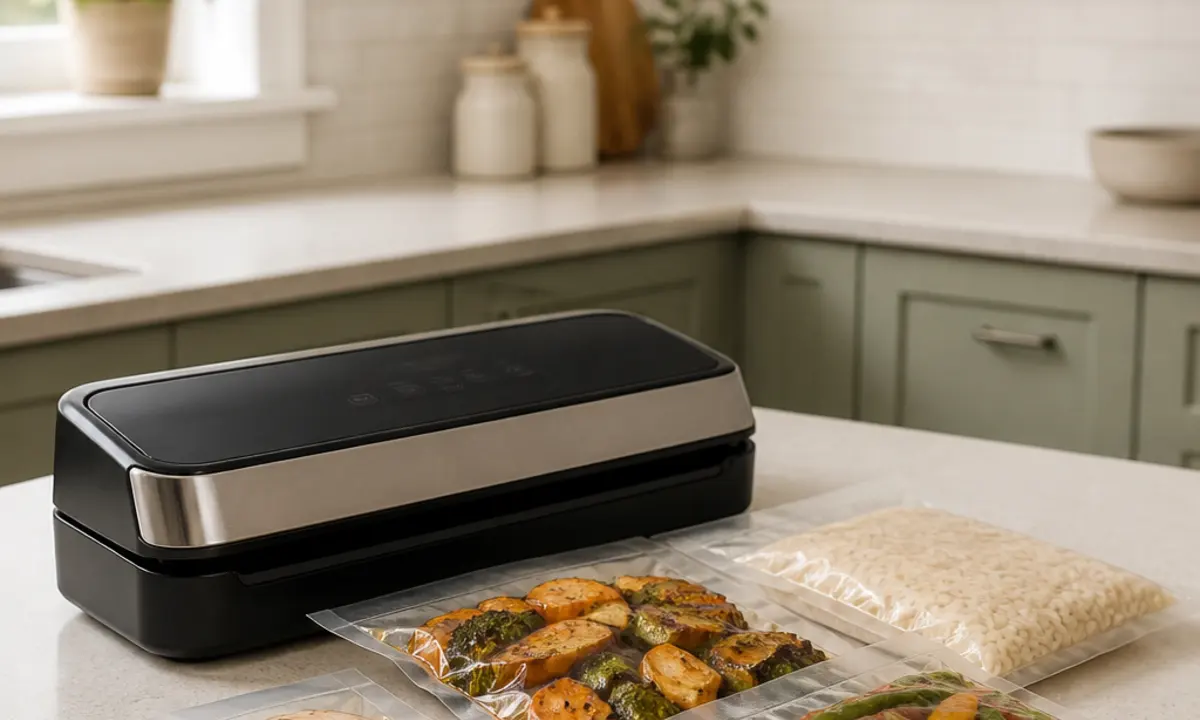
FoodSaver PowerVac VS0150
Why it made the shortlistConsider when compact vertical storage and separate Dry/Moist settings fit your batch routine; it does not remove the need to control liquids and food temperature.
- Useful for
- A compact external vacuum-sealing workflow when vertical storage, dry/moist modes and flat freezer packets match the routine.
- Source-checked details
- The current Amazon listing identifies the VS0150 and specifies vertical storage, Dry and Moist settings, a bag-alignment tray, compatibility with a handheld sealer, and an included starter roll and bags. FoodSaver's current warranty page lists a three-year limited warranty for the PowerVac series.
- Watch for
- Vacuum packaging does not make perishable food shelf-stable. Keep perishables at 40°F or below in the refrigerator or at 0°F in the freezer, and budget for compatible bags or rolls.
Check the exact model, seller, availability and current terms on the live listing before buying.
Image note: This generic, unbranded image illustrates the product type and is not a photograph of the exact named product.
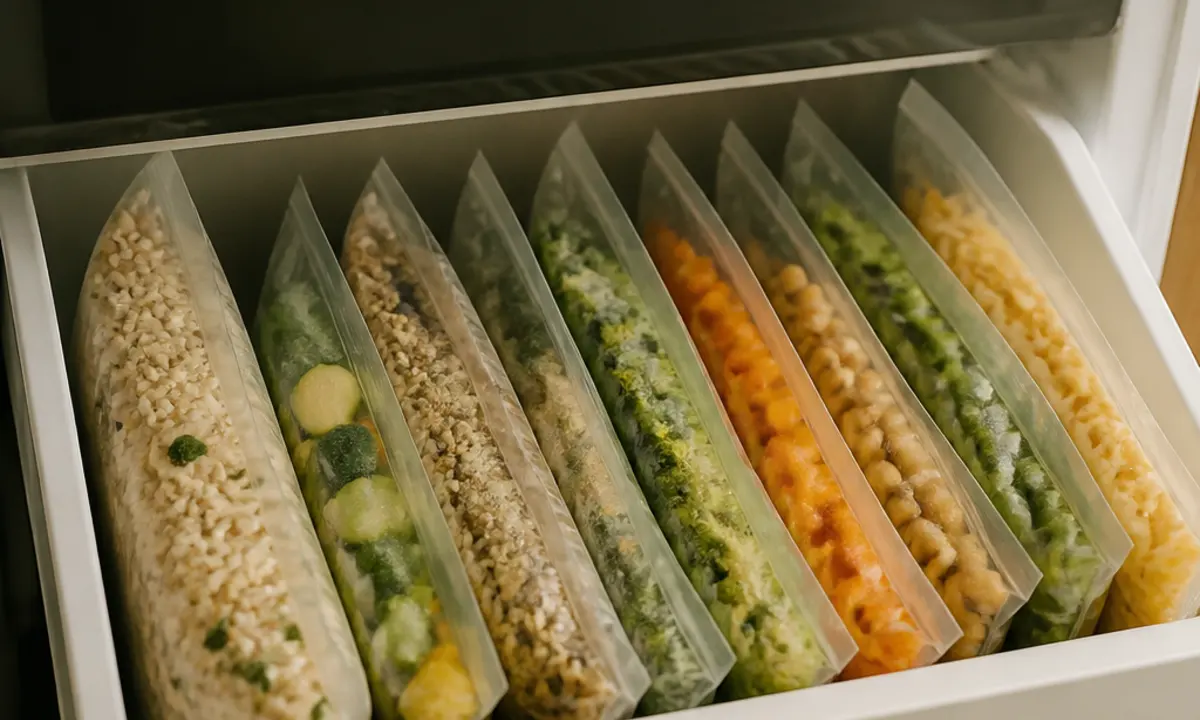
FoodSaver Heavy Duty Quart Bags
Why it made the shortlistConsider when quart-size heat-seal bags suit your measured portions and the exact bag is compatible with your FoodSaver appliance.
- Useful for
- Pre-cut quart-size heat-seal packs when portion consistency matters and a compatible countertop FoodSaver appliance is already part of the workflow.
- Source-checked details
- FoodSaver identifies 44 pre-cut quart bags, freezer suitability and compatibility with FoodSaver appliances except handheld sealers. The manufacturer describes this version as a single-use heat-seal bag rather than a reusable zipper bag.
- Watch for
- Requires a compatible heat-seal appliance and uses a new bag for each pack. Do not treat the manufacturer's promotional freshness language as an independently verified performance result.
Check the exact model, seller, availability and current terms on the live listing before buying.
Image note: This generic, unbranded image illustrates the product type and is not a photograph of the exact named product.
A repeatable six-step routine
- Classify the food. Decide whether it is dry, moist, liquid, fragile or irregular before choosing the package.
- Cool cooked food safely. Divide large amounts into shallow containers so they cool promptly.
- Pre-freeze when needed. Firming wet or delicate food can make the final package easier to control.
- Protect the seal zone. Keep the open edge clean and follow the appliance instructions for bag length and fill level.
- Label and freeze flat. Add the contents and date, then freeze in one layer until solid.
- Inspect before storage and use. Repackage punctured bags and follow food-specific thawing and reheating guidance.
When not to force the bag format
Use a rigid container when a meal must keep its shape, a liquid is hard to control, the contents will be opened repeatedly, or the food needs protection from crushing. A mixed system is usually more practical than trying to put every food into the same package.
For the package-level trade-offs, use the heat-seal bags vs reusable containers guide. For machine specifications, see the vacuum-sealer buying checklist.
Sources and evidence boundaries
Food-safety guidance comes from USDA, FDA and the National Center for Home Food Preservation. Product claims come from the current manufacturer guidance and Amazon listings for the named ASINs. Kitchen Flow Lab did not conduct hands-on seal-strength, storage-duration or food-quality testing, so this page does not promise that one packaging format keeps every food better or longer.
Useful detail
Food-fit questions before the machine starts
A vacuum bag is useful only when the food can be sealed cleanly, protected from damage and handled safely afterward.
Which foods may need a supported pre-freezing step?
Soft, fragile or liquid-heavy foods may need to become stable before close-fitting packaging is attempted. Follow food-safety guidance and the exact machine and bag instructions rather than treating pre-freezing as a universal requirement.
Can free liquid interfere with a heat seal?
Yes. Moisture, oil or food in the seal area can prevent a clean closure and may be drawn toward the machine. Use a package and preparation route designed for the food instead of relying on the vacuum cycle to manage liquid.
Use the liquid-food workflowWhat is the clean-seal zone?
It is the clear, dry section of bag reserved for making the closure. Allow enough bag length for the appliance, keep food away from the sealing surface and inspect the finished seal before freezing.
Next decision
Match the package to the whole freezer system.
Once the food and package fit, build a flat-packet zone with a consistent portion, label and rotation rule.
Build a flat-packet system →