Jump to the two researched sealers →
Start with the food condition
External vacuum sealers work by drawing air from the open end of a textured bag and then heat-sealing the opening. Free liquid can move toward the vacuum channel before the seal is made. A moist setting may change sealing time. A pulse or gentle setting may reduce compression. These controls help, but they do not replace a suitable food state, a clean dry seal zone and the exact machine instructions.
For liquid-heavy or fragile food, the safer workflow may involve supported pre-freezing, a rigid first container or a different packaging method. Decide that before comparing machines.
What the common controls actually change
Moist seal
Usually increases sealing time for a bag that has some food moisture near the contents.
Gentle pressure
Reduces vacuum pressure for softer food that could be crushed under a full cycle.
Pulse vacuum
Lets the operator stop and inspect while approaching the desired air removal.
Double seal
Adds a second closure line or sealing pass when the product instructions call for it.
Duty cycle decides whether the machine fits a batch
Batch meal prep can involve dozens of bags. A machine that needs cooling time between cycles changes the entire session. NESCO's VS-12 guide specifies one operating cycle every two minutes. Anova describes its Pro model as capable of more than 100 continuous seals. Those are materially different workflows, even when both machines offer controls for wet or delicate food.
Count the likely bags in one session and include the work of cutting rolls, filling, cleaning the seal zone, applying labels and arranging packets flat. Maximum speed is less useful than a pace the full process can sustain safely.
Bag workflow and cleanup deserve equal weight
Built-in roll storage and a cutter can keep bag making close to the sealing area. Pre-cut bags reduce preparation but limit size choice. A removable drip tray or accessible vacuum channel can simplify cleanup after a moist-food session. Accessory ports expand the system to compatible containers, but only when the household will actually use and maintain them.
Before buying, price and locate the compatible bags or rolls without assuming every textured bag works with every appliance. Ongoing supply, storage and disposal are part of the product decision.
Two machines for different batch styles
Anova emphasizes continuous sealing, a double sealer, roll storage and lower-pressure control. NESCO provides a detailed control set that includes dry, moist and double timing plus normal, gentle and pulse vacuum, with a specified rest interval. The distinction is not “better” and “worse.” It is continuous throughput versus a deliberate paced cycle with more explicit front-panel choices.
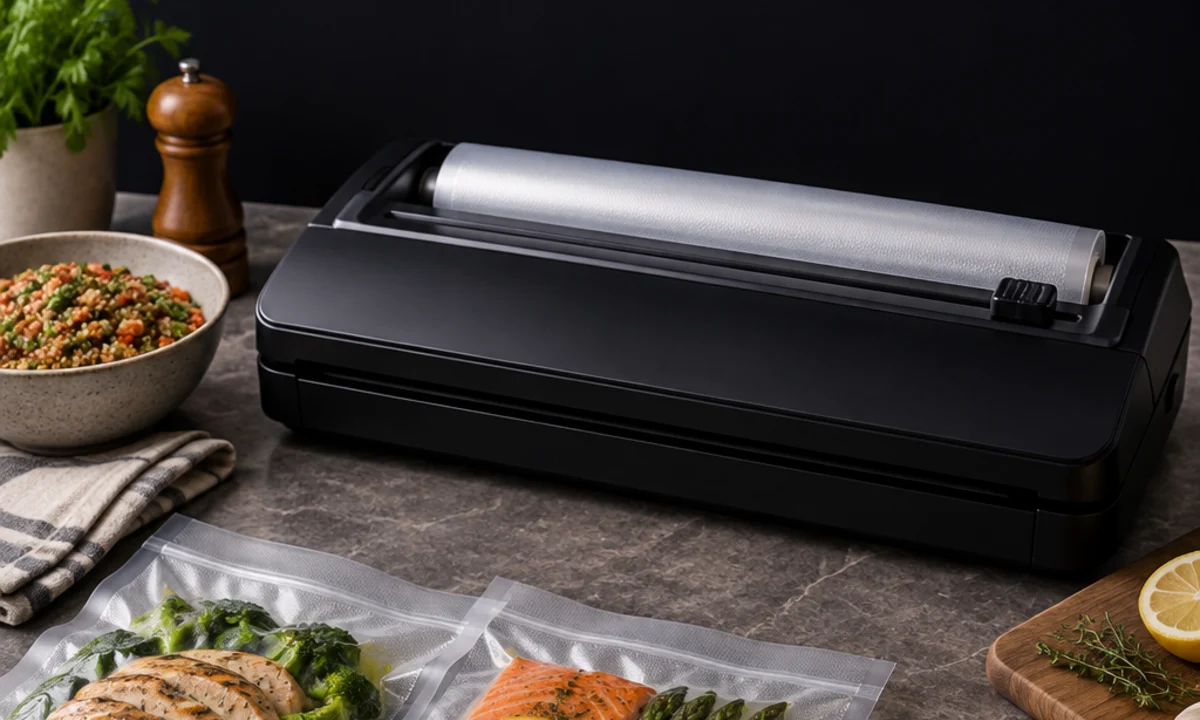
Anova Precision Vacuum Sealer Pro
Why it made the shortlistConsider when long batch sessions, a built-in roll workflow and a double-seal function matter more than the footprint of a smaller sealer.
- Useful for
- Batch sealing when double seals, roll storage, a cutter and controlled suction for moist or delicate food are valuable.
- Source-checked details
- Anova specifies a double sealer, built-in bag storage and cutter, accessory port, low-pressure suction function and capacity for more than 100 continuous seals. The listed extraction rate is 12 liters per minute.
- Watch for
- A wet-food function does not make free liquid safe to draw into the appliance. Follow the machine instructions, keep the seal zone clean and dry, and pre-freeze or choose another package when the food requires it.
Check the exact model, seller, availability and current terms on the live listing before buying.
Image note: This generic, unbranded image illustrates the product type and is not a photograph of the exact named product.
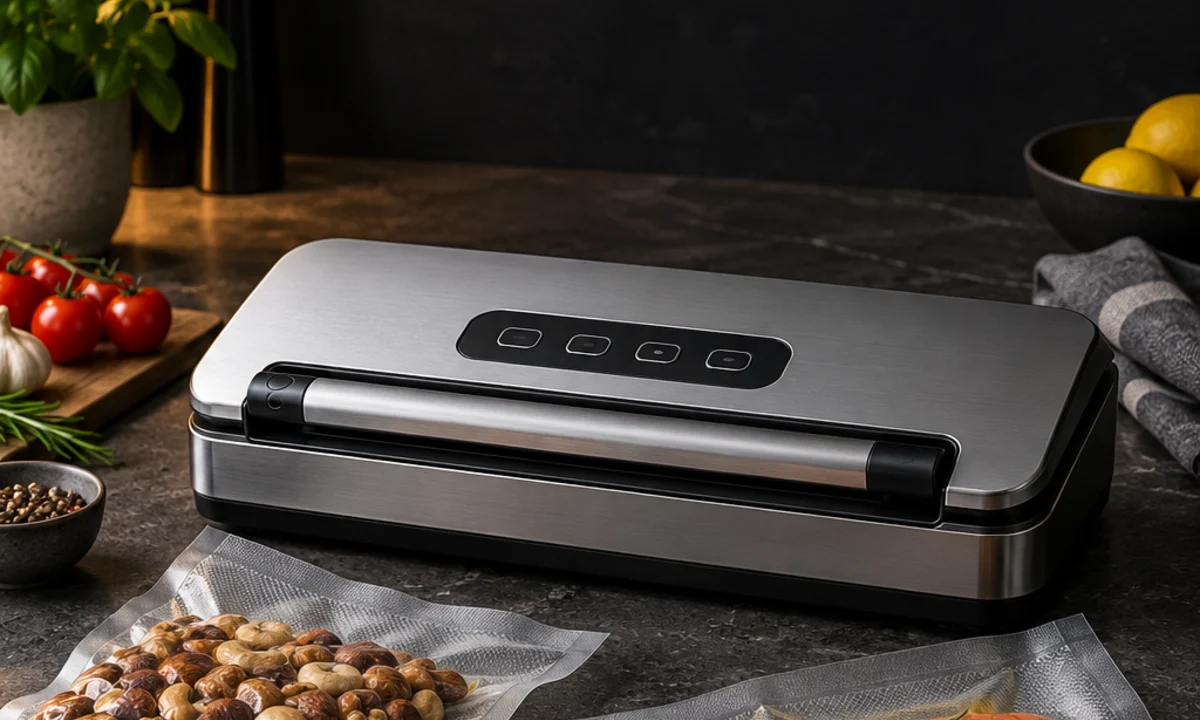
NESCO VS-12 Deluxe
Why it made the shortlistConsider when separate pressure and seal-time controls suit a careful food-by-food workflow and the specified two-minute operating cycle fits the batch pace.
- Useful for
- A controlled bag workflow that needs dry, moist and double-seal timing plus normal, gentle and pulse vacuum options.
- Source-checked details
- The NESCO care and use guide lists 130 watts, dry, moist and double sealing times, normal and gentle pressure settings, pulse vacuum, manual seal, a canister port, bag cutter and storage for an 11-inch roll.
- Watch for
- NESCO limits the appliance to one operating cycle every two minutes. Match the duty cycle to the size of the batch instead of assuming every full-size machine supports continuous sealing.
Check the exact model, seller, availability and current terms on the live listing before buying.
Image note: This generic, unbranded image illustrates the product type and is not a photograph of the exact named product.
A pre-purchase batch simulation
- Count one normal batch. Record the number and approximate size of packages.
- Classify the food. Separate dry, moist, fragile and liquid-heavy items.
- Map each control. Identify which setting or preparation step the manufacturer specifies for each class.
- Include cooling time. Apply the stated duty cycle to the number of planned seals.
- Plan cleanup and storage. Decide where the roll, spare bags, labels and clean appliance will live.
Useful detail
Controls that need operational context
A button label describes one machine function. Food condition, bag preparation, duty cycle and cleanup determine whether the full process works.
Does a moist setting manage free liquid?
Not by itself. A moist setting commonly changes sealing time, while free liquid can still move toward the vacuum channel. Follow the exact instructions, keep the seal zone clean and dry, and use pre-freezing or another package when required.
Sort food by bag suitabilityWhat is the practical difference between pulse and gentle vacuum?
A gentle mode uses a reduced pressure setting for delicate food. Pulse control lets the operator advance and stop the vacuum manually. The exact behavior belongs to the specific machine, so use the manual rather than treating the terms as universal.
Why can duty cycle matter more than suction?
A batch contains repeated sealing cycles. Required cooling time can set the real pace and may protect the appliance. Estimate the number of packages and apply the manufacturer's cycle limit before assuming a machine suits large sessions.
Smaller reusable workflow
Compare handheld vacuum bags and containers.
A valve-based reusable system solves a different job from permanent heat-seal packets.
Compare handheld vacuum systems →