Jump to the two reusable vacuum systems →
When reusable vacuum storage is the better question
A permanent heat seal is efficient when a portion should remain closed until use. A valve-based bag or container is useful when food is accessed in stages, the package must be reopened or the household wants a reusable format. The trade-off is maintenance. Zippers, valves, lids and seals need correct cleaning, drying and alignment before the next cycle.
Start with access frequency. If the package will be opened once, a heat-seal bag may be simpler. If it will be opened three or four times, a reusable system can reduce repeated repacking, provided the food and manufacturer instructions support that use.
Choose the package before the pump
Reusable zipper bag
Flexible storage for firm food when the valve and zipper can stay clean and dry.
Glass vacuum box
Rigid protection for meals or fragile food, with more fixed freezer space.
Accessory container
A compatible rigid vessel for marinating or foods that need repeated access.
Heat-seal packet
A permanent single-use closure for flat portions that will stay sealed until needed.
The maintenance questions that determine real value
Reusable bags must be washed and dried as directed, including the zipper and valve area. Glass containers need lid, seal and valve care. A wet or contaminated closure can prevent a reliable vacuum. The pump needs a charging location where it is easy to return after use. If any one of those steps is awkward, the system may be abandoned even when the product specifications look strong.
Replacement availability matters too. Check whether bags, lids, valves and containers can be purchased separately for the exact system. A reusable format earns its environmental and practical value only through repeated successful use.
Vacuum does not replace cold storage
Removing air does not make perishable food shelf-stable. Refrigerate or freeze the food as required, label the package and follow current food-safety guidance. Release the vacuum or vent the package as directed before microwave reheating. Do not assume a reusable bag, glass base and plastic lid share the same appliance instructions.
Two ways to build the reusable workflow
ZWILLING's starter set centers on a compact rechargeable pump shared by glass containers and reusable zipper bags. FoodSaver Handheld+ combines a countertop heat sealer with a detachable cordless pump, so one appliance can support both permanent heat-seal packets and compatible reusable accessories. Choose between a focused reusable ecosystem and a broader two-in-one workflow.
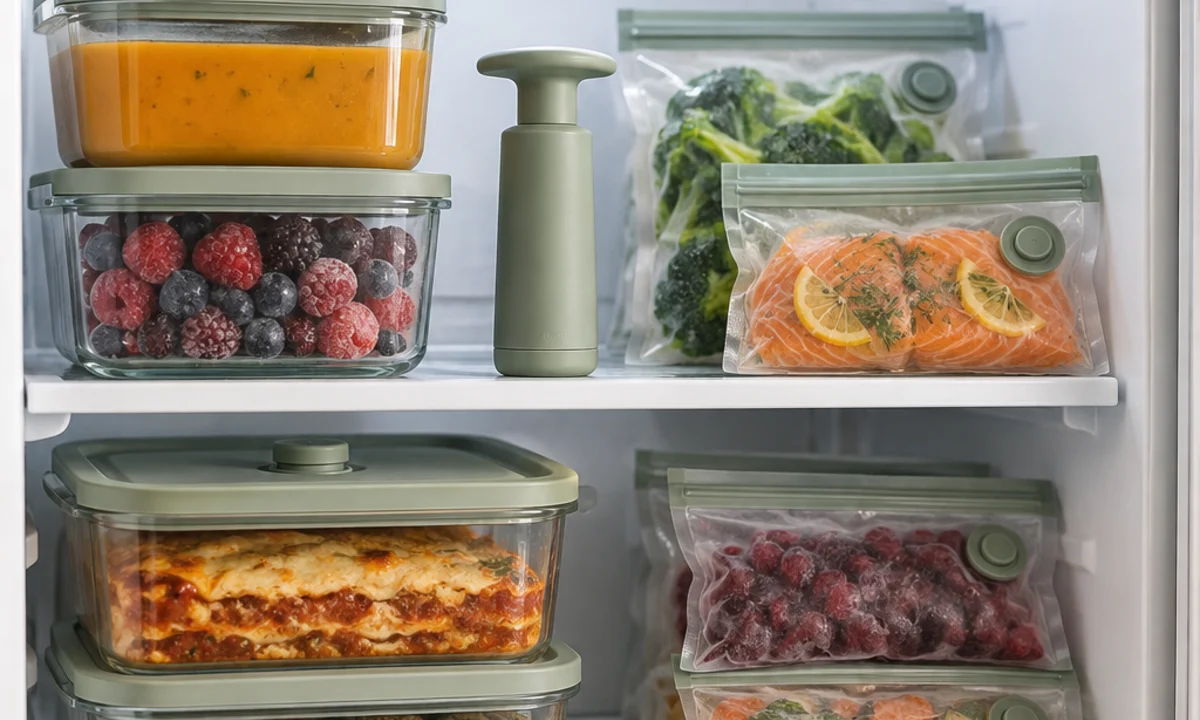
ZWILLING Fresh & Save Glass
Why it made the shortlistConsider when reusable bags and rigid glass containers should share one compact pump, and the household will maintain the valves, lids and charging routine.
- Useful for
- A reusable vacuum system that combines rigid glass containers and zipper bags with one handheld pump.
- Source-checked details
- ZWILLING specifies one medium and one large glass vacuum container, four reusable vacuum bags and a rechargeable pump. The containers are nestable, freezer safe and ovenproof without lids; the bags are described as freezer safe and reusable.
- Watch for
- The bags and containers use valves and seals that need correct cleaning and alignment. Remove the vacuum seal before microwave use and follow the manufacturer's separate instructions for bags, lids and glass bases.
Check the exact model, seller, availability and current terms on the live listing before buying.
Image note: This generic, unbranded image illustrates the product type and is not a photograph of the exact named product.
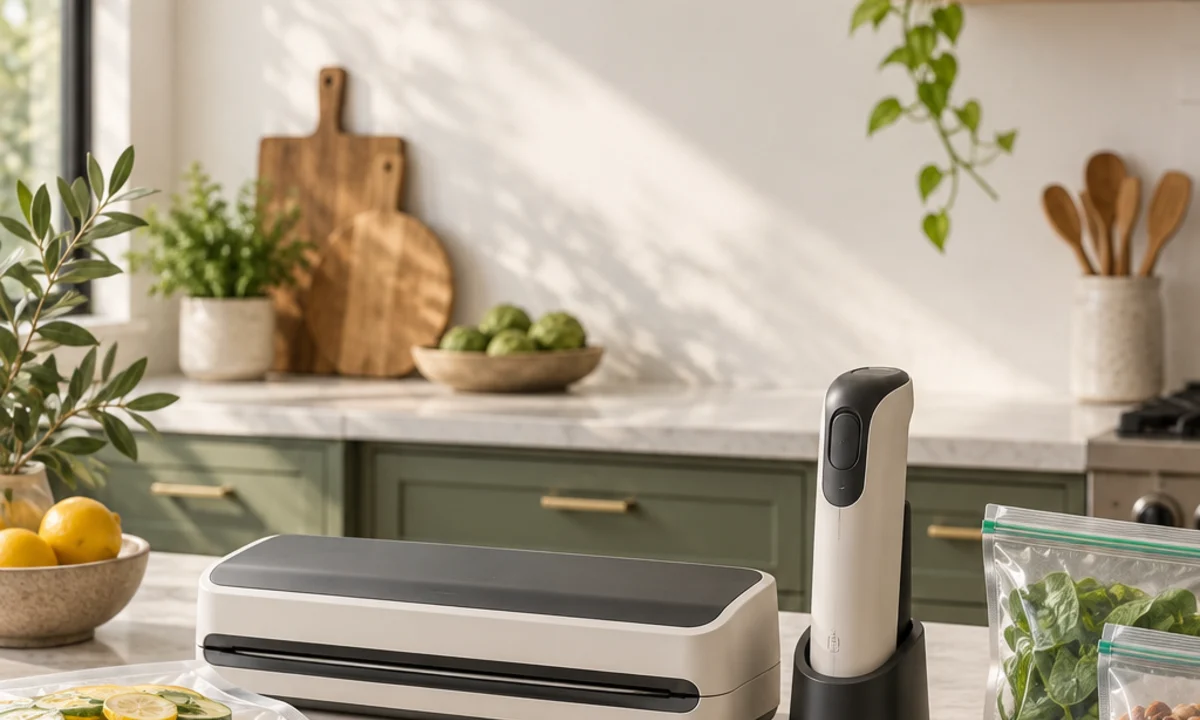
FoodSaver Handheld+ 2-in-1
Why it made the shortlistConsider when the freezer needs both permanent heat-seal packets and reusable zipper-bag or accessory workflows from one two-in-one system.
- Useful for
- One system for heat-seal rolls, reusable zipper bags and compatible vacuum accessories.
- Source-checked details
- FoodSaver specifies a countertop sealer with a detachable cordless handheld unit, Marinate mode and compatibility with FoodSaver bags, rolls and accessories. The starter kit includes heat-seal bags, reusable zipper bags and a bottle stopper.
- Watch for
- The two workflows use different packages and closure steps. Confirm which bags are reusable, which require a heat seal and which foods need pre-freezing or another liquid-control method.
Check the exact model, seller, availability and current terms on the live listing before buying.
Image note: This generic, unbranded image illustrates the product type and is not a photograph of the exact named product.
A seven-day reality check
- List foods opened repeatedly. These are the strongest candidates for a reusable package.
- Match rigid or flexible protection. Fragile food and liquids may need a container instead of a bag.
- Assign a wash-and-dry location. Include the zipper, valve, lid and seal.
- Assign a charging home. The pump should return to one accessible place after every use.
- Check replacement parts. Confirm current availability for the exact bag, lid or container family.
- Label the cold-storage route. Vacuum packaging does not remove refrigerator or freezer requirements.
- Review after one week. Keep the formats that were reopened, resealed and cleaned without friction.
Useful detail
Questions that make a reusable system last
Reusable vacuum storage depends on access frequency, closure care, drying, replacement parts and a pump that is ready when needed.
Which foods benefit most from a reusable vacuum package?
Start with food accessed in stages or stored in a rigid container for shape protection. A permanent heat-seal packet may remain simpler for a single portion that stays closed until use.
Why do the valve and zipper need separate attention?
Both are part of the closure. Residue, moisture or misalignment can prevent a reliable vacuum. Clean, dry and inspect every closure surface according to the exact product directions before resealing.
What should be replaceable in a reusable system?
Check current availability for compatible bags, containers, lids and the pump or charger. Reuse is easier to sustain when a damaged or lost part does not retire the entire system.
Build the inspection and replacement routinePermanent packets
Need a larger heat-seal batch instead?
Compare moist, gentle, pulse and double-seal controls plus the machine's duty cycle.
Compare batch-sealer controls →