Jump to the researched glass systems →
Quick answer: buy for the route, not the material label
A listing that says freezer safe answers only the storage question. A useful freezer-to-reheat system also needs a portion that fits the meal, an external footprint that fits the shelf, a lid routine that is easy to follow and a manufacturer-approved reheating route. Some glass bases may enter a microwave or oven only after the lid is removed. Some instructions require a thawing or temperature-transition step. The exact directions take priority over a general belief that all glass behaves alike.
Start by writing the real sequence in one line: cool, portion, freeze, thaw or temper, reheat, serve, clean. A product earns a place only when every step has a clear answer.
Five checks before choosing a glass freezer set
Temperature route
Confirm the maker's exact freezer, microwave, oven and thermal-shock directions.
Lid position
Know whether the lid must be removed, vented or unlatched before reheating.
Useful capacity
Choose the amount normally reheated, with room for expansion and stirring.
Filled footprint
Measure width, depth, stack height and removal clearance in the actual freezer.
Freezer safe is not the same as instant freezer-to-oven
“Freezer safe” means the manufacturer permits freezer storage when its instructions are followed. It does not automatically mean a frozen container can move directly into a hot oven. Rapid temperature change can stress glass, and the safe route varies by product. Read the care page or manual for the exact set, including any instruction about preheated ovens, wet or cold surfaces, lids and damaged containers.
This distinction also matters in the microwave. A base may be microwave safe while the lid must be removed. A lid that can remain on may need its vents or latches in a specified position. Build the instruction into the label or household routine instead of expecting someone to remember it months later.
Match the set shape to the food
Shallow rectangles suit complete meals and can support more even reheating than a deep, narrow portion. Small rounds and rectangles can be useful for sauces, grains and recipe components, but only when those jobs recur. One repeated medium size simplifies stacking and lid matching. A mixed set creates flexibility, while a repeated set creates predictability.
Do not count pieces. Count useful bases. A ten-piece set often means five containers and five lids. Compare the number of complete portions, the capacities you will actually fill and the cabinet space the system occupies between batches.
Two current systems with different strengths
Both products below are included as source-checked examples, not as claims of personal testing. Ello focuses on five repeated 3.4-cup meal-prep containers with protective sleeves. OXO uses several capacities in one modular family. The better fit depends on whether repetition or mixed-size flexibility solves the larger problem.
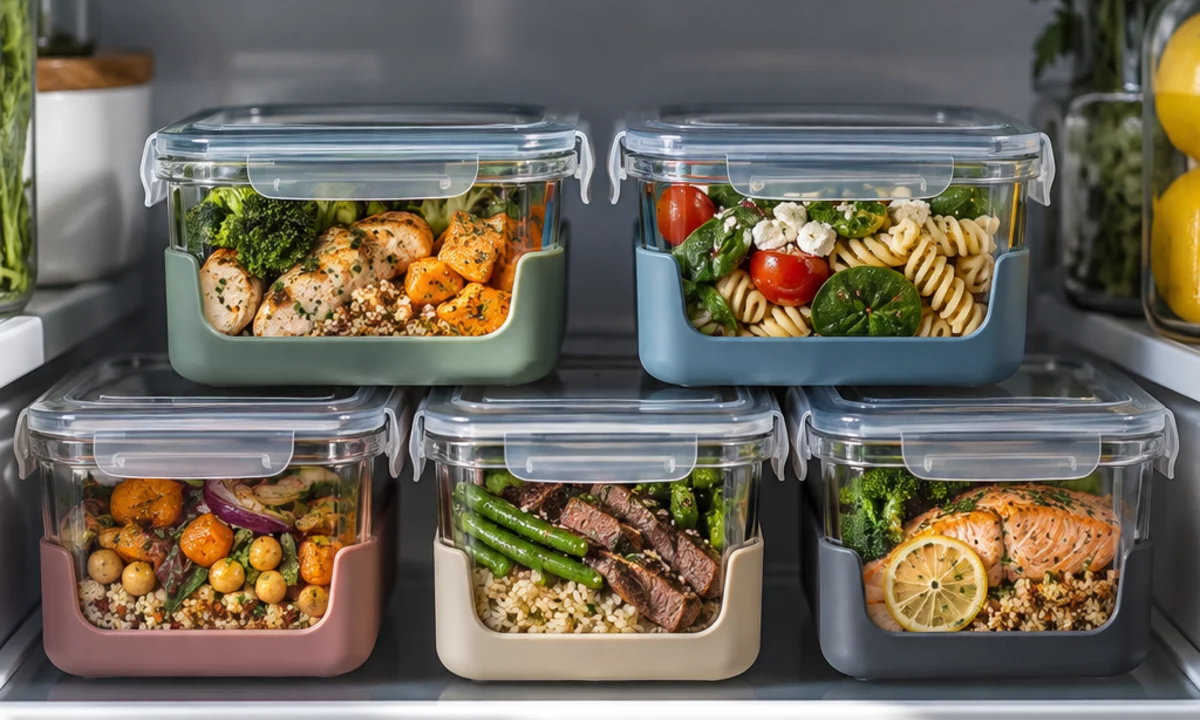
Ello Duraglass Refresh
Why it made the shortlistConsider when five matching 3.4-cup portions, protective sleeves and a simple repeated stack fit the weekly meal-prep routine.
- Useful for
- A five-container glass meal-prep set when protective sleeves, visible portions and a direct reheating route matter.
- Source-checked details
- Ello specifies five 3.4-cup glass containers with airtight locking lids and protective silicone boots. The manufacturer lists dishwasher and freezer use with the lids, and microwave and oven use after the lids are removed.
- Watch for
- The silicone sleeves protect surfaces and add grip, but they do not remove the need to follow the manufacturer's thermal-shock instructions. Remove lids for microwave and oven use.
Check the exact model, seller, availability and current terms on the live listing before buying.
Image note: This generic, unbranded image illustrates the product type and is not a photograph of the exact named product.
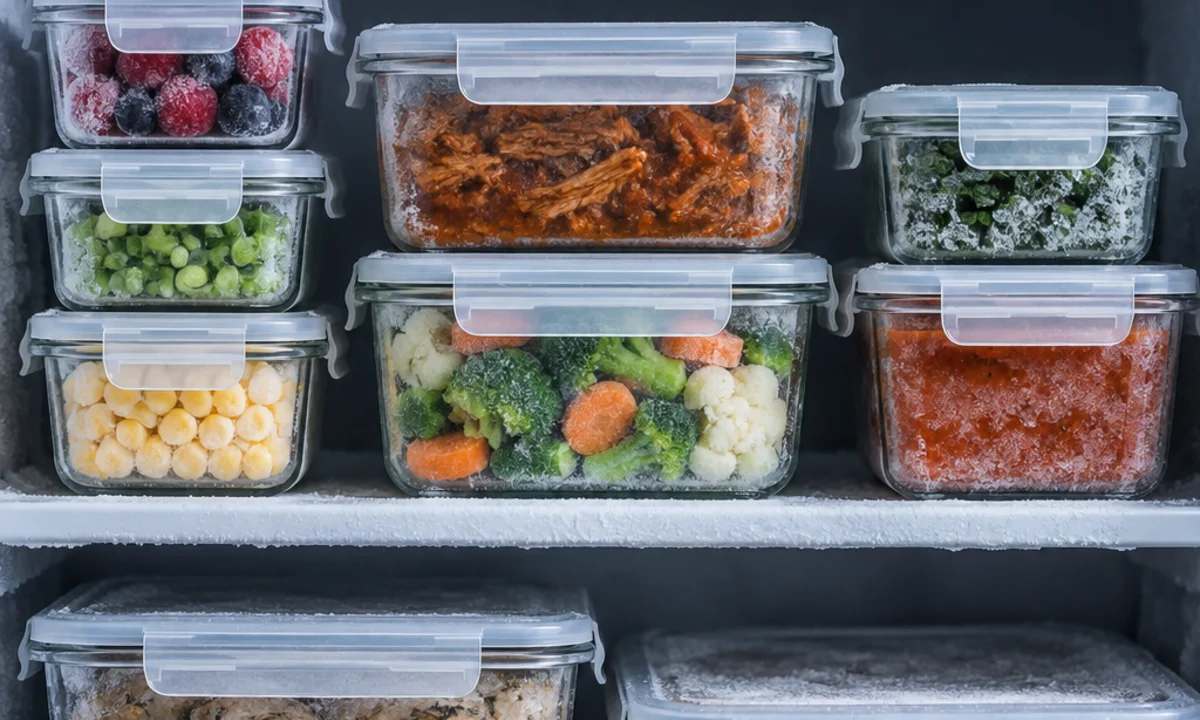
OXO Smart Seal Glass
Why it made the shortlistConsider when one lid family must cover small recipe components and larger portions, and the mixed capacities will all earn regular jobs.
- Useful for
- A mixed-size glass system when smaller recipe components and complete portions need one coordinated lid family.
- Source-checked details
- OXO specifies borosilicate glass, four-tab locking lids, removable gaskets and a modular nesting design. The current set includes small round and rectangular containers plus a 3.5-cup rectangle, and the manufacturer describes freezer-to-oven or microwave use.
- Watch for
- The set mixes several capacities, so confirm that the smaller pieces solve recurring jobs rather than becoming unused cabinet clutter. Follow the exact lid and temperature-change directions.
Check the exact model, seller, availability and current terms on the live listing before buying.
Image note: This generic, unbranded image illustrates the product type and is not a photograph of the exact named product.
A practical glass-container test before buying a full set
- Measure one freezer lane. Record usable width, depth and stack height, including the space needed to lift a lid or remove the top container.
- Name three real meals. Use meals the household already freezes, not an imagined future routine.
- Assign one capacity to each meal. Allow for expansion, stirring and the amount normally eaten at one sitting.
- Write the reheating route. Include thawing, lid position, appliance and final temperature check.
- Check the empty system. Decide where bases, lids and removable seals will dry and live when not in use.
Common mistakes
- Applying one brand's oven instructions to a different glass product.
- Choosing a large set before proving that its capacities match recurring portions.
- Ignoring the weight of a full stack when shelves or hands make lifting difficult.
- Leaving lids sealed during reheating without checking the exact directions.
- Placing damaged, chipped or cracked glass back into the freezer system.
Useful detail
Glass-container details that change the route
The base, lid and temperature instructions form one system. A general glass label cannot replace the exact product directions.
Does freezer-to-oven mean straight from a frozen shelf into a hot oven?
Only when the manufacturer explicitly allows that transition for the exact product and the stated conditions are followed. Freezer suitability, oven suitability and thermal-shock instructions are separate checks. When the route is not explicit, thaw or transfer according to current food-safety and product guidance.
Build the full thaw and reheat routeIs one repeated size better than a mixed glass set?
A repeated size simplifies portions, stacking and lid matching. A mixed set can handle sauces, sides and complete meals with one container family. Choose the pattern that covers recurring jobs with the fewest unused pieces.
How should glass weight affect the freezer layout?
Keep heavy stacks within the shelf and container limits, leave safe removal clearance and avoid creating a pile that must be lifted as one unit. A stable shorter stack can be more usable than the maximum number that technically fits.
Next decision
Decide whether the meal needs one well or two.
Divided glass containers solve a different problem: keeping a main and side separate in one complete-meal package.
Compare divided glass containers →