The five-column batch map
Build the map in this order
- Count future eating events. Plan the number of lunches, dinners and recipe components, not just the number of recipes.
- Audit empty containers and bags. Count usable pieces after removing damaged or mismatched items.
- Measure remaining freezer capacity. Protect airflow and leave room for the first-stage freezing tray.
- Assign the wettest foods first. Soup, sauce and loose liquids have fewer safe packaging options than firm components.
- Match portions to packages. Do not stretch a package beyond its stated use or fill guidance.
- Prepare labels before the batch. Prewriting food names and portion units reduces rushed, unreadable labels.
Example: one cooking session, four storage routes
This is a planning example, not a storage-time recommendation. Check food-specific guidance for the actual recipes and ingredients.
A mixed-format batch example
These products demonstrate why one batch may need more than one container format. Product information was checked on 18 August 2026; verify current instructions and listing details.
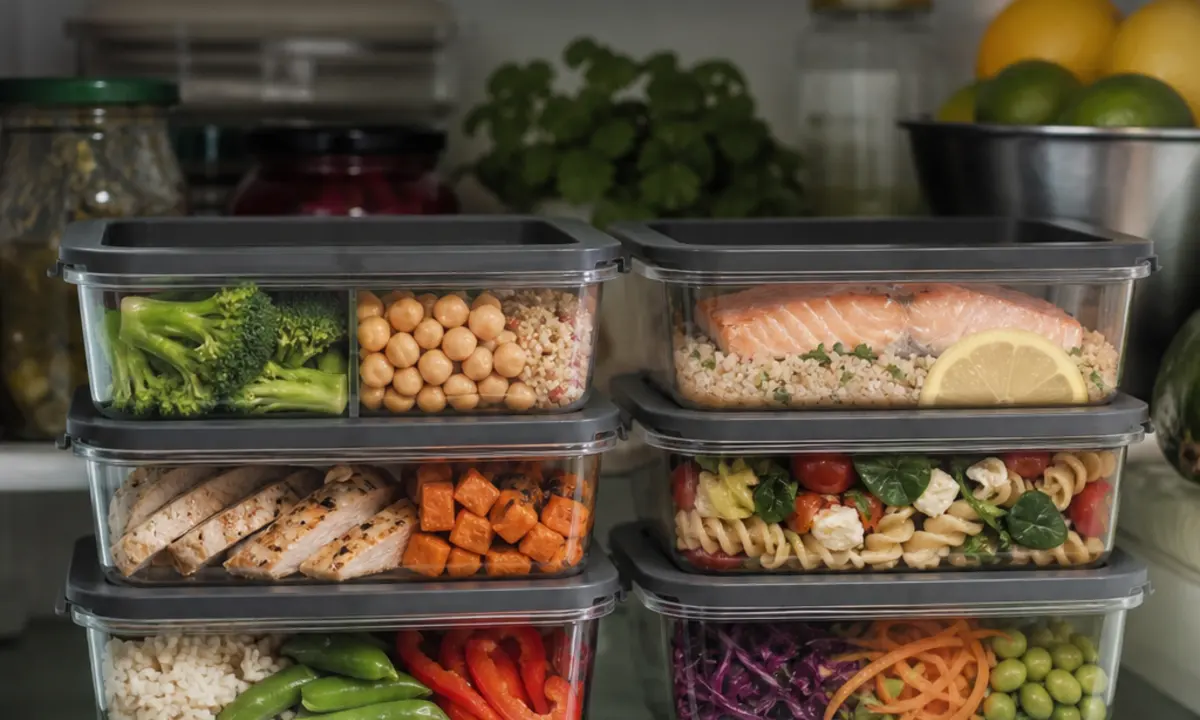
Rubbermaid Brilliance Plastic
Why it made the shortlistConsider when lightweight rigid meal portions and a consistent stacking footprint suit the batch; follow the exact freezer, microwave and lid instructions.
- Useful for
- A lighter, rigid and stackable system for lunches and complete meals.
- Source-checked details
- Rubbermaid specifies freezer, microwave and dishwasher use for its Brilliance food-storage range, plus vented lids and a modular stack.
- Watch for
- The selected Amazon set and the manufacturer's reference set are not identical piece counts; verify the exact capacities shown on the live listing before buying.
Check the exact model, seller, availability and current terms on the live listing before buying.
Image note: This generic, unbranded image illustrates the product type and is not a photograph of the exact named product.
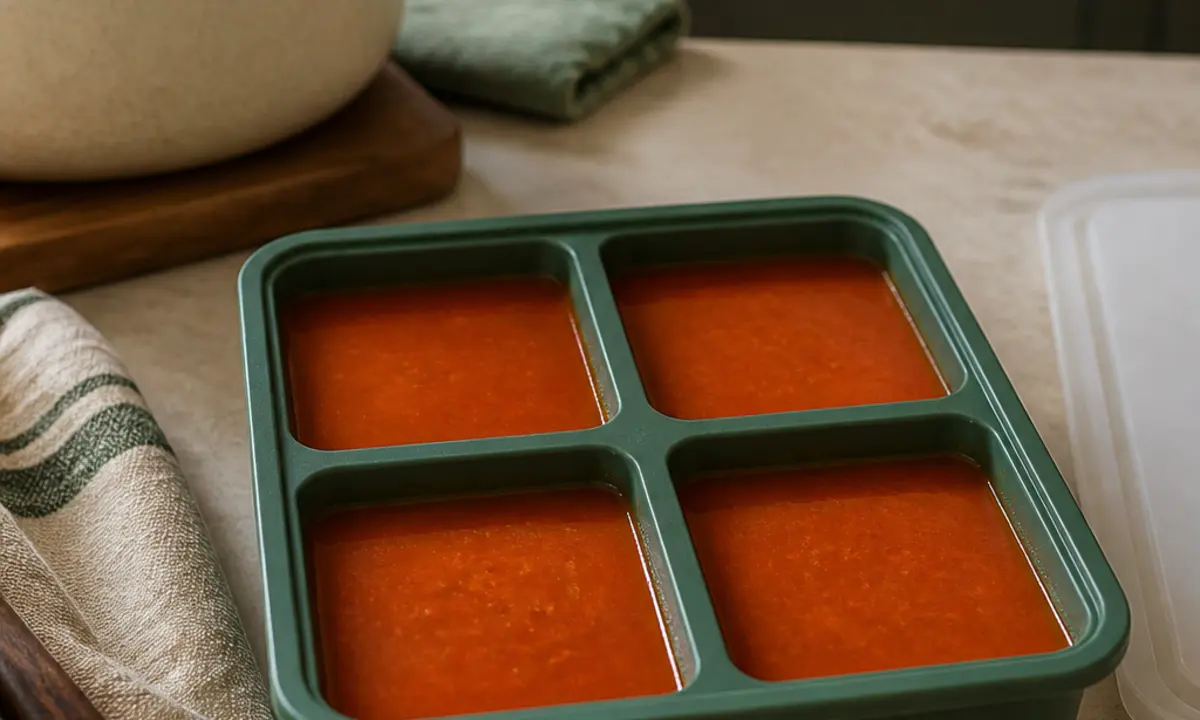
Souper Cubes 1-Cup Trays
Why it made the shortlistConsider when measured frozen blocks make soup, sauce or stock easier to combine into future recipes.
- Useful for
- Freezing soup, stock and sauce in repeatable one-cup portions before transferring the frozen portions to compact storage.
- Source-checked details
- Souper Cubes specifies four one-cup wells per tray, half-cup and one-cup fill lines, a stacking lid and an oven-safe temperature of 415°F for the tray only.
- Watch for
- This is a portion-forming tray, not the final transport container. The lid is not oven-safe; follow the product instructions.
Check the exact model, seller, availability and current terms on the live listing before buying.
Image note: This generic, unbranded image illustrates the product type and is not a photograph of the exact named product.
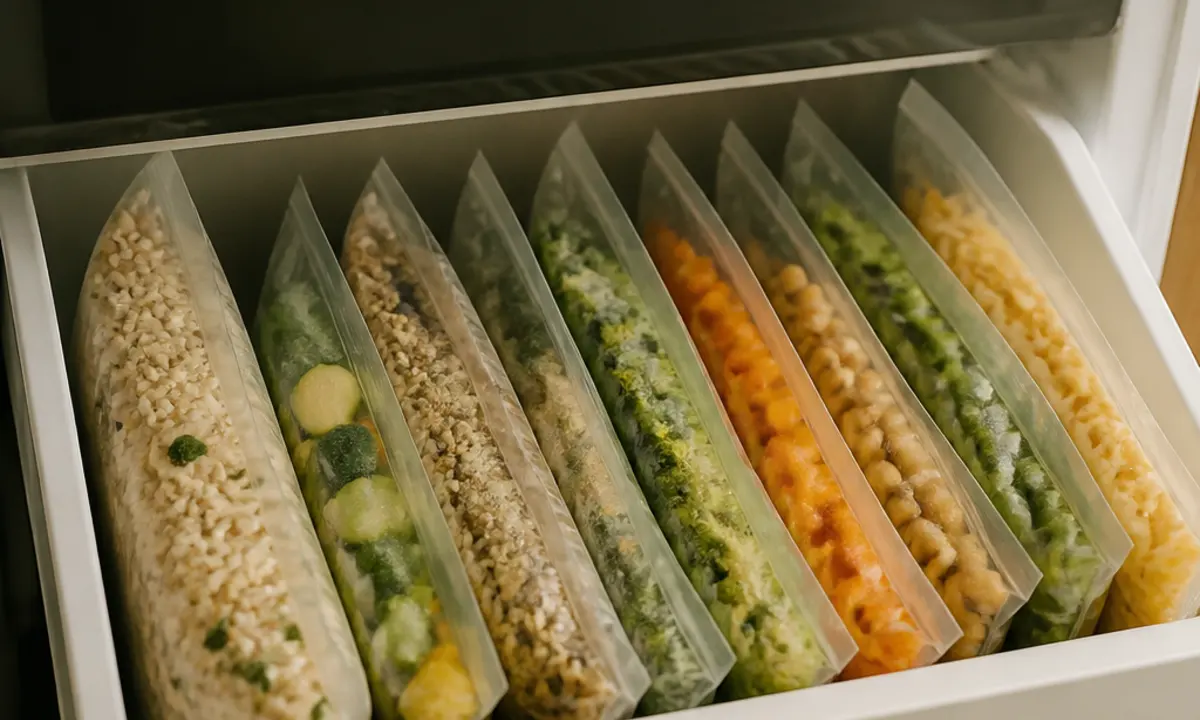
FoodSaver Heavy Duty Quart Bags
Why it made the shortlistConsider for firm or pre-frozen components when the food, portion and compatible heat-seal workflow all fit.
- Useful for
- Pre-cut quart-size heat-seal packs when portion consistency matters and a compatible countertop FoodSaver appliance is already part of the workflow.
- Source-checked details
- FoodSaver identifies 44 pre-cut quart bags, freezer suitability and compatibility with FoodSaver appliances except handheld sealers. The manufacturer describes this version as a single-use heat-seal bag rather than a reusable zipper bag.
- Watch for
- Requires a compatible heat-seal appliance and uses a new bag for each pack. Do not treat the manufacturer's promotional freshness language as an independently verified performance result.
Check the exact model, seller, availability and current terms on the live listing before buying.
Image note: This generic, unbranded image illustrates the product type and is not a photograph of the exact named product.
The stop rule
Stop adding recipes when any one of these becomes true: there is no safe cooling space, the freeze-flat area is full, the planned packages are exhausted, the final zones will block airflow, or the labelling system can no longer distinguish the batch. A smaller completed batch is more useful than an oversized session that creates unidentified or poorly handled food.
Sources and evidence boundaries
Safety guidance comes from FDA, USDA and FoodSafety.gov. Product facts come from manufacturer information and current Amazon listings for the named ASINs. Kitchen Flow Lab did not time a cooking session, test freezer capacity or validate portions for a specific household.
Useful detail
Questions to answer before the cooking starts
The storage map prevents cooked food from reaching the counter without a suitable portion, package or freezer destination.
Why assign storage before cooking?
It exposes missing containers, labels and shelf capacity while the plan can still change. This reduces the chance of placing every finished component into whatever package happens to be available.
Why should wet foods be planned first?
Soups, stews and sauces need supported filling, expansion room and a clear cooling and reheating route. Once those demanding items have suitable destinations, firmer components can use the remaining formats more flexibly.
Plan liquid portions and containersWhat is a useful batch-cooking stop rule?
Stop when the measured freezer zone, available packaging or realistic meal plan is full. Producing more portions than the system can label, cool, store and rotate creates work rather than useful inventory.
Protect the result
Choose packaging that limits quality loss.
Understand what air removal, close wrapping and freezer temperature can and cannot do about freezer burn.
Read the packaging guide →