What freezer burn does and does not mean
USDA describes freezer burn as a quality issue rather than a food-safety issue. It can leave dry, discolored areas when frozen food is exposed to air. Food kept continuously frozen at 0°F (-18°C) remains safe indefinitely, while published freezer times address quality.
That distinction matters: a package can look unattractive without becoming unsafe because of freezer burn alone, and a good-looking package can still be mishandled. Temperature and food-specific handling remain essential.
The four controls you can actually manage
Package fit
Choose a package that can sit close to the food without crushing it or forcing liquid into a closure.
Closure integrity
Keep sealing areas clean, close lids as directed and inspect for punctures, warped parts or incomplete seals.
Freezer temperature
Keep the freezer at 0°F (-18°C) or below and avoid habits that create repeated partial thawing.
Rotation
Label and use older food first instead of relying on packaging to preserve peak quality without limit.
Match the barrier to the food
Three packaging formats, three different jobs
These researched examples illustrate formats rather than a universal performance ranking. Product details were checked on 18 August 2026. Kitchen Flow Lab did not conduct comparative freezer-burn tests.
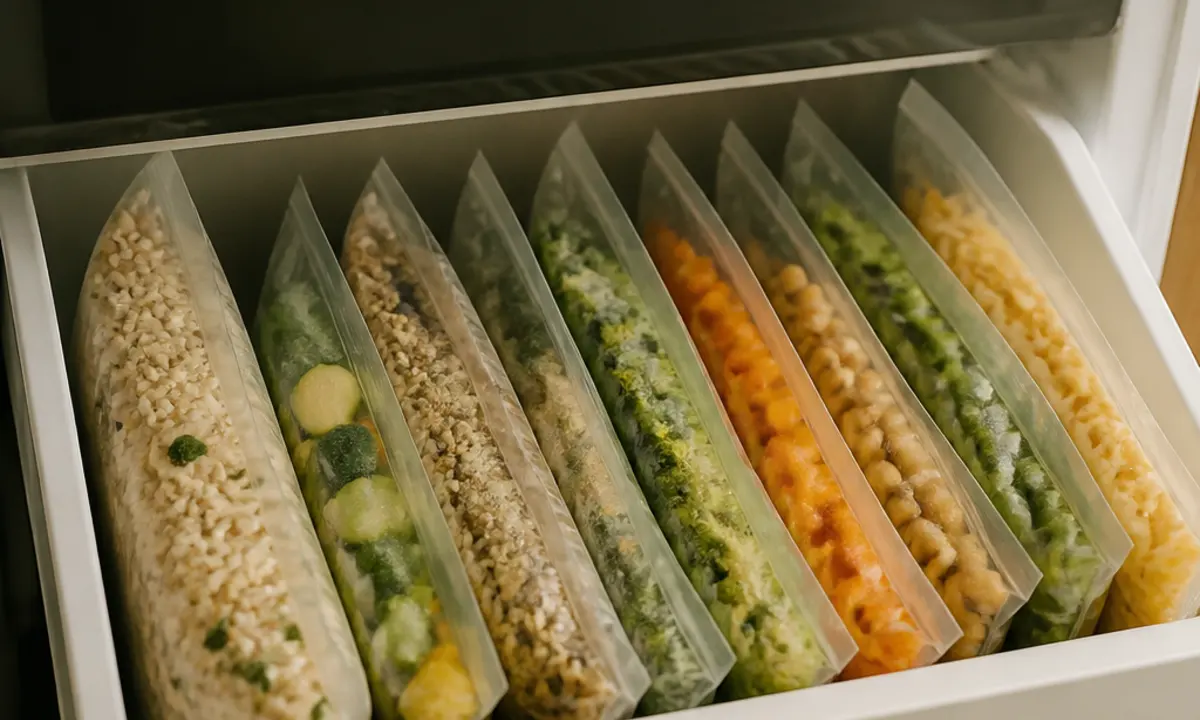
FoodSaver Heavy Duty Quart Bags
Why it made the shortlistConsider when close-fitting heat-seal packaging suits the food and compatible sealer; inspect the finished seal and protect the bag from punctures.
- Useful for
- Pre-cut quart-size heat-seal packs when portion consistency matters and a compatible countertop FoodSaver appliance is already part of the workflow.
- Source-checked details
- FoodSaver identifies 44 pre-cut quart bags, freezer suitability and compatibility with FoodSaver appliances except handheld sealers. The manufacturer describes this version as a single-use heat-seal bag rather than a reusable zipper bag.
- Watch for
- Requires a compatible heat-seal appliance and uses a new bag for each pack. Do not treat the manufacturer's promotional freshness language as an independently verified performance result.
Check the exact model, seller, availability and current terms on the live listing before buying.
Image note: This generic, unbranded image illustrates the product type and is not a photograph of the exact named product.
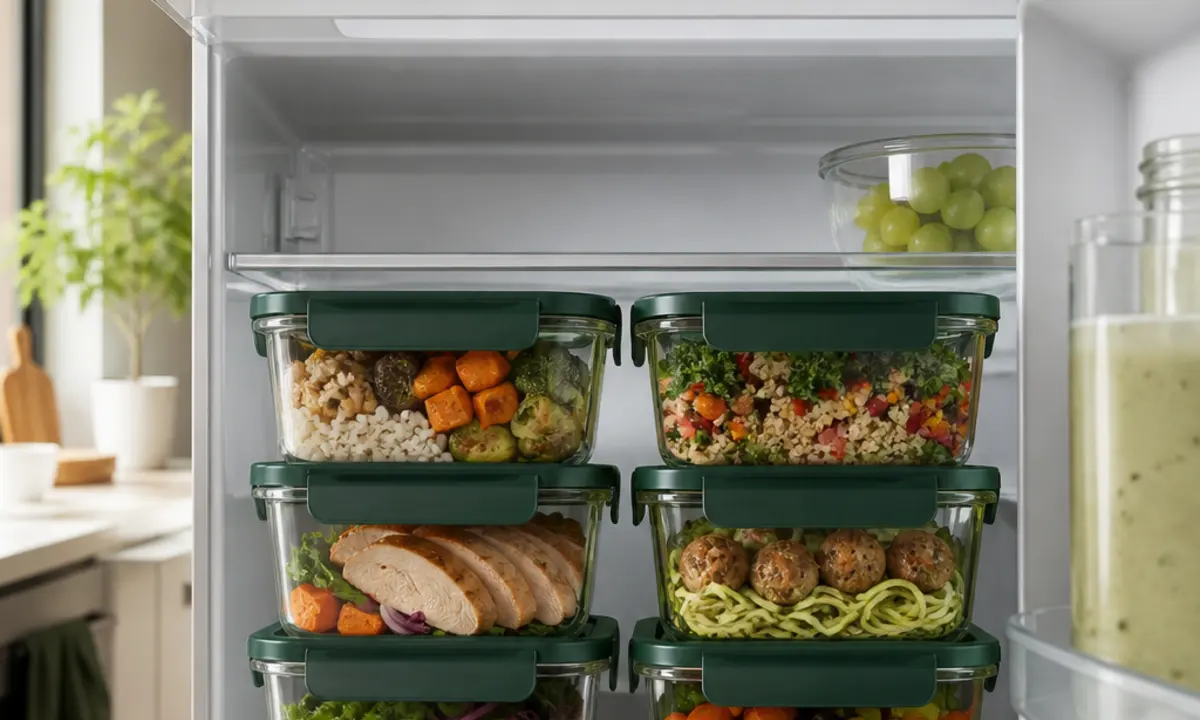
Rubbermaid Brilliance Glass
Why it made the shortlistConsider when rigid protection, a clear vessel and the documented freezer/reheating route fit the meal.
- Useful for
- A stackable glass system when reheating and stain resistance matter.
- Source-checked details
- Rubbermaid lists the range as freezer-, microwave- and dishwasher-safe, with glass bases oven-safe to 450°F. The manufacturer also specifies modular stacking and universal lids across Brilliance materials.
- Watch for
- Glass is heavier and takes more fixed freezer space. Follow the exact thermal-shock and lid instructions supplied with the product.
Check the exact model, seller, availability and current terms on the live listing before buying.
Image note: This generic, unbranded image illustrates the product type and is not a photograph of the exact named product.
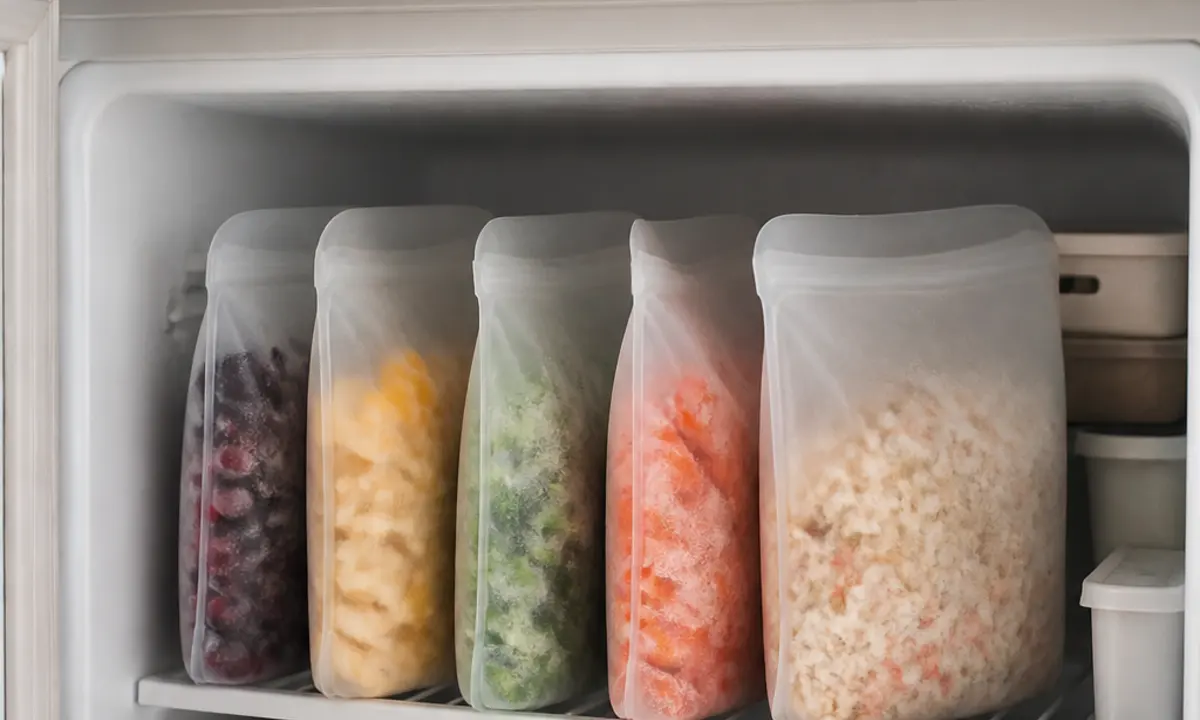
Stasher Stand-Up Mid
Why it made the shortlistConsider when a reusable flexible closure fits the food and repeated-use routine; follow the product’s exact fill, closure and care directions.
- Useful for
- Flexible freezer storage when an empty container should collapse into less space.
- Source-checked details
- Stasher specifies a 56 fl oz stand-up format, Pinch-Loc seal, and freezer, microwave, dishwasher and oven use up to 425°F.
- Watch for
- Flexible sides can be less stable than rigid boxes while filling and stacking. Keep the seal clean and avoid sharp objects.
Check the exact model, seller, availability and current terms on the live listing before buying.
Image note: This generic, unbranded image illustrates the product type and is not a photograph of the exact named product.
A six-point package inspection
- Right size: the package is not so large that it leaves unnecessary empty space or so small that the closure is strained.
- Clean edge: food, oil and moisture are kept away from the seal or rim as the instructions require.
- Complete closure: the seal, zipper, clips or lid are engaged across the full closing surface.
- No visible damage: punctures, cracks, distorted rims and worn gaskets trigger repackaging or replacement.
- Readable label: contents and stored date remain visible in the final freezer orientation.
- Stable zone: the package is supported and not pressed against sharp edges or unstable stacks.
Sources and evidence boundaries
Freezing and freezer-burn guidance comes from USDA and FDA. Product claims come from manufacturer information and current Amazon listings for the named ASINs. No Kitchen Flow Lab laboratory, sensory, seal-strength, puncture or storage-duration testing was performed.
Useful detail
Packaging questions behind freezer quality
Good packaging reduces avoidable exposure and damage, but it cannot correct poor handling or make quality permanent.
Is maximum air removal always the right goal?
No. The package must also protect the food's shape, keep the closure clean and suit the product instructions. Fragile food may need controlled pre-freezing or rigid protection rather than aggressive compression.
What changes when a package is opened repeatedly?
Each opening creates another handling and closure event. Use a reclosable container for food accessed in stages, or divide it into smaller sealed portions so the unopened supply remains protected.
Why is rotation part of packaging quality?
Even a suitable package can be forgotten. Clear dates, a use-first position and a small inventory help the household choose older portions before adding more food.
Build the label and rotation ruleComplete the loop
Use labels and inventory to protect quality.
Packaging begins the storage period; a visible use-first system prevents forgotten food from staying frozen long past its best quality.
Build the inventory system →