Start with three morning routes
Choose a small menu by how breakfast will be eaten, not by how many recipes look freezer-friendly. A repeatable system can cover a sit-down meal, a portable meal and a component that finishes quickly with a fresh item.
Sit-down
A complete portion that can move into a suitable reheating vessel and be checked for even heating.
02Grab-and-go
A compact portion with a secure transport plan and no unsupported leakproof assumption.
03Build-and-finish
A frozen component paired later with fruit, toast, yogurt or another fresh addition.
04Backup
A clearly labelled reserve that protects the routine when the main weekly plan runs short.
The breakfast batch workflow
- Choose the future eating event. Decide whether each portion is for home, work, school or travel before choosing its package.
- Use a recipe developed for freezing. Ingredient structure affects thawed texture. Treat recipe-specific guidance separately from general food safety.
- Cook egg dishes and other components safely. FoodSafety.gov lists 160°F (71°C) for egg dishes such as frittata or quiche and 165°F (74°C) for casseroles containing meat or poultry.
- Cool promptly. FDA recommends refrigerating or freezing perishables within two hours and dividing larger amounts into shallow containers for quicker cooling.
- Portion for the actual morning. Keep one breakfast event in each package where practical so the rest of the batch remains frozen.
- Label the thawing and heating route. Include any recipe-supported finish step and the exact container instruction.
- Rotate through a visible breakfast zone. Move older portions forward and avoid adding another batch when the use-first row is already full.
Build the menu by structure
Three package formats for different breakfast jobs
These products are examples of distinct container formats, not universal breakfast recommendations. Manufacturer information and the existing Amazon Special Links were checked on 26 September 2026. Confirm the current listing and instructions before buying or heating.
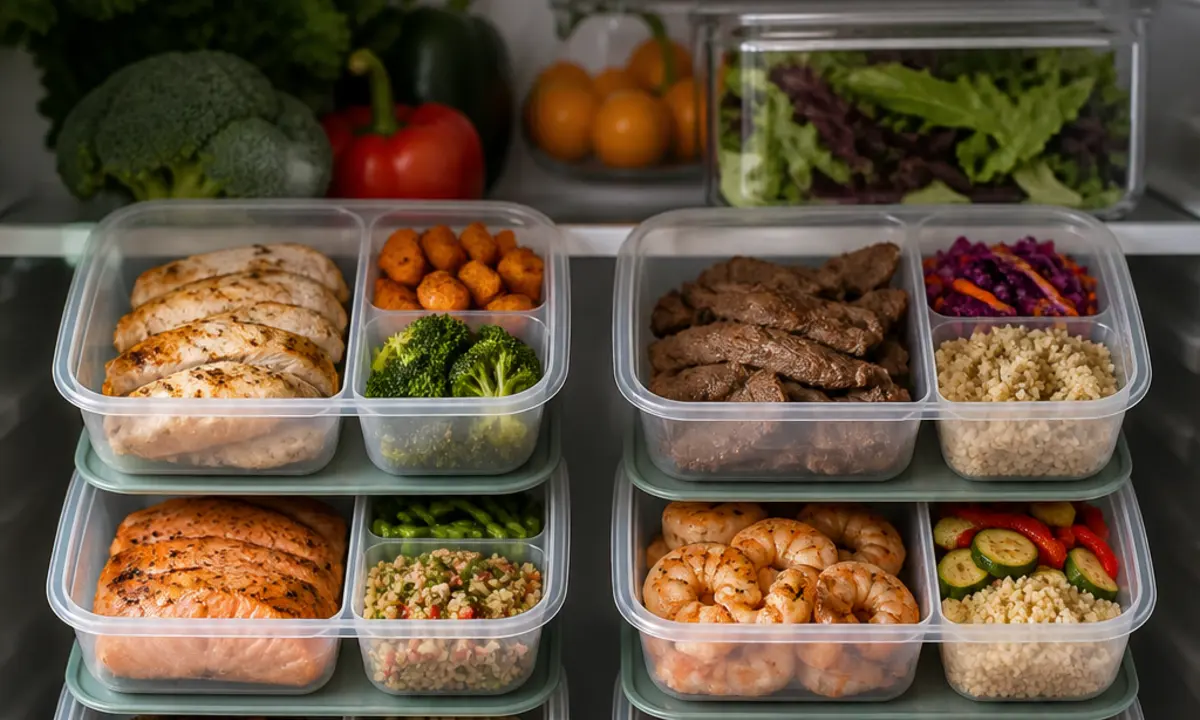
Bentgo Prep 3-Compartment
Why it made the shortlistConsider when a fixed three-compartment tray matches a complete breakfast with separated components. Remove the lid before microwaving and do not treat the format as a soup or leakproof container.
- Useful for
- Pre-portioned meals where one entrée and two sides should stay separated.
- Source-checked details
- Bentgo lists ten 4-cup trays with three compartments. The trays are freezer- and microwave-safe; the manufacturer says to remove lids before microwaving and hand-wash lids for best results.
- Watch for
- Compartment shapes reduce flexibility for soups and bulky foods. This is a lightweight system, not a leakproof soup container.
Check the exact model, seller, availability and current terms on the live listing before buying.
Image note: This generic, unbranded image illustrates the product type and is not a photograph of the exact named product.
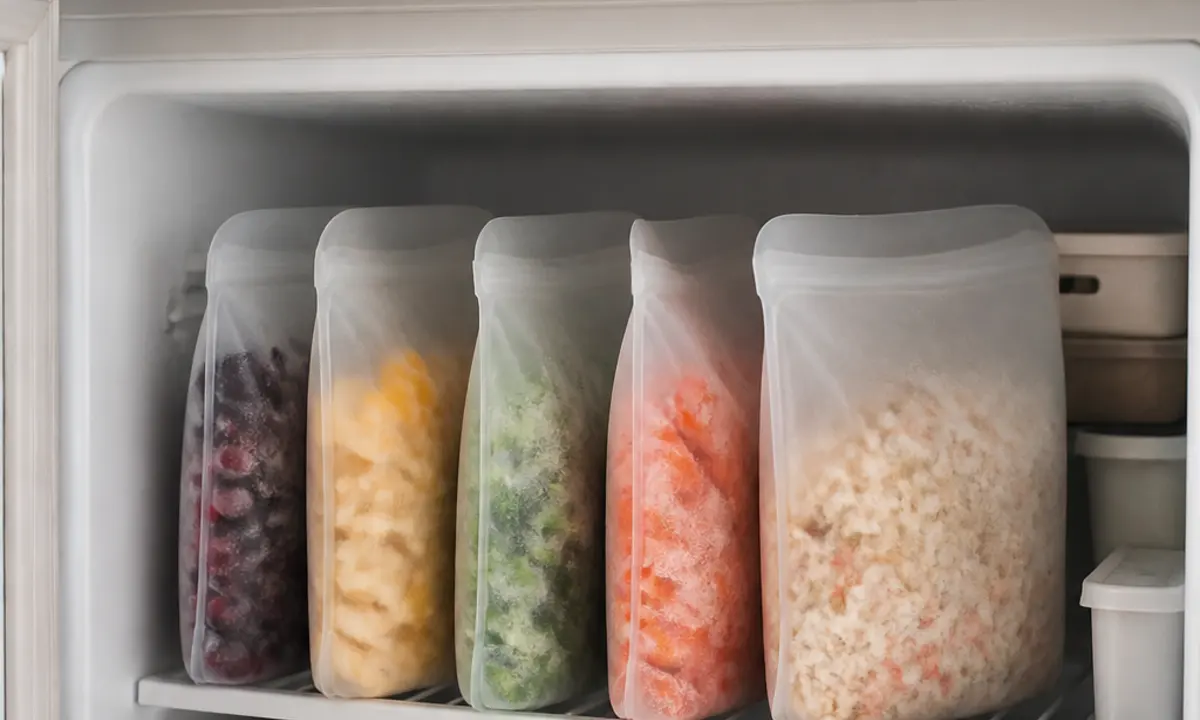
Stasher Stand-Up Mid
Why it made the shortlistConsider when a flexible stand-up bag suits firm breakfast components or a compact freezer zone. Keep it supported while filling and protect the seal from trapped food or sharp edges.
- Useful for
- Flexible freezer storage when an empty container should collapse into less space.
- Source-checked details
- Stasher specifies a 56 fl oz stand-up format, Pinch-Loc seal, and freezer, microwave, dishwasher and oven use up to 425°F.
- Watch for
- Flexible sides can be less stable than rigid boxes while filling and stacking. Keep the seal clean and avoid sharp objects.
Check the exact model, seller, availability and current terms on the live listing before buying.
Image note: This generic, unbranded image illustrates the product type and is not a photograph of the exact named product.
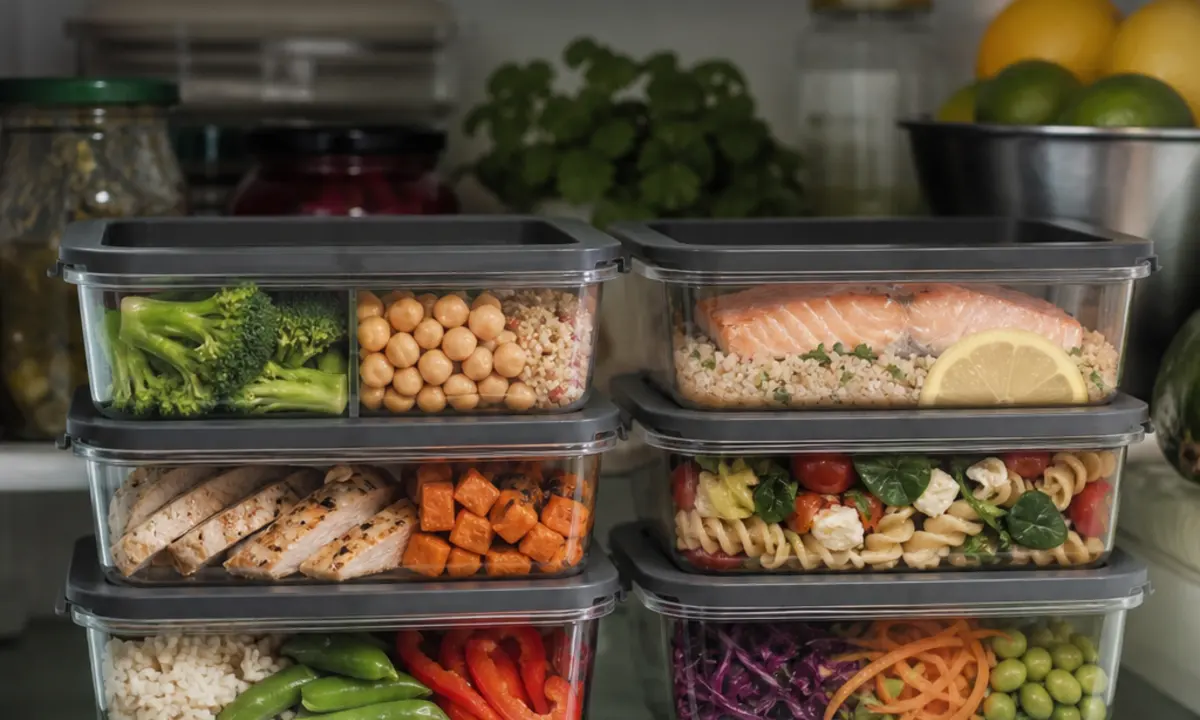
Rubbermaid Brilliance Plastic
Why it made the shortlistConsider when a lighter rigid container and modular stack suit repeated breakfast portions. Verify the capacity of the exact set and follow the venting and microwave directions.
- Useful for
- A lighter, rigid and stackable system for lunches and complete meals.
- Source-checked details
- Rubbermaid specifies freezer, microwave and dishwasher use for its Brilliance food-storage range, plus vented lids and a modular stack.
- Watch for
- The selected Amazon set and the manufacturer's reference set are not identical piece counts; verify the exact capacities shown on the live listing before buying.
Check the exact model, seller, availability and current terms on the live listing before buying.
Image note: This generic, unbranded image illustrates the product type and is not a photograph of the exact named product.
A ten-breakfast capacity check
Before cooking ten portions, place ten empty packages, or a measured equivalent, into the planned freezer zone. Keep room for airflow and for the tray or level surface needed during the first freeze. If the full set does not fit without blocking access, reduce the batch or use fewer package footprints.
Count the number of breakfast events already frozen. A new batch should fill a real gap rather than bury older portions. Use the weekly freezer inventory to identify what needs to be used first.
The label for a rushed morning
- Name: identify the recipe or component precisely.
- Stored date: support rotation rather than guesswork.
- Morning route: home, packed lunch bag or finish-with-fresh-items.
- First step: refrigerator thaw, microwave route or recipe-supported from-frozen heating.
- Container action: remove lid, vent, transfer or place on a dish as the manufacturer directs.
- Safety check: include a recipe-appropriate thermometer reminder when reheating is required.
For the complete return route, use the safe thawing and reheating guide.
Sources and evidence boundaries
Food-safety statements come from FDA, USDA and FoodSafety.gov. Product facts come from current manufacturer pages and the recorded Amazon links for the named ASINs. Kitchen Flow Lab did not test any recipe, thawed texture, heating time, transport seal or household batch size.
Useful detail
Breakfast questions that prevent unused portions
A freezer breakfast earns its space when the portion, package and morning preparation route work together.
What is a useful breakfast portion?
Build the portion around one real morning and the appetite, appliance and time available. A smaller repeatable unit can be more useful than a large batch that requires extra separation or thawing.
Why do moisture and shape matter for breakfast packaging?
Soft bowls need stirring space and headroom, while sandwiches and baked items need shape protection. Choose the package after identifying what the food must preserve on the route back to the plate.
When should breakfast meal prep pause?
Pause when the breakfast zone is full, labels are becoming hard to read or older portions are not being selected. Use the inventory before producing another batch.
Add breakfast to the weekly resetKeep the system visible
Give breakfast its own freezer inventory line.
Count useful portions, move the oldest items forward and stop the next batch before the zone becomes an archive.
Build the inventory system →